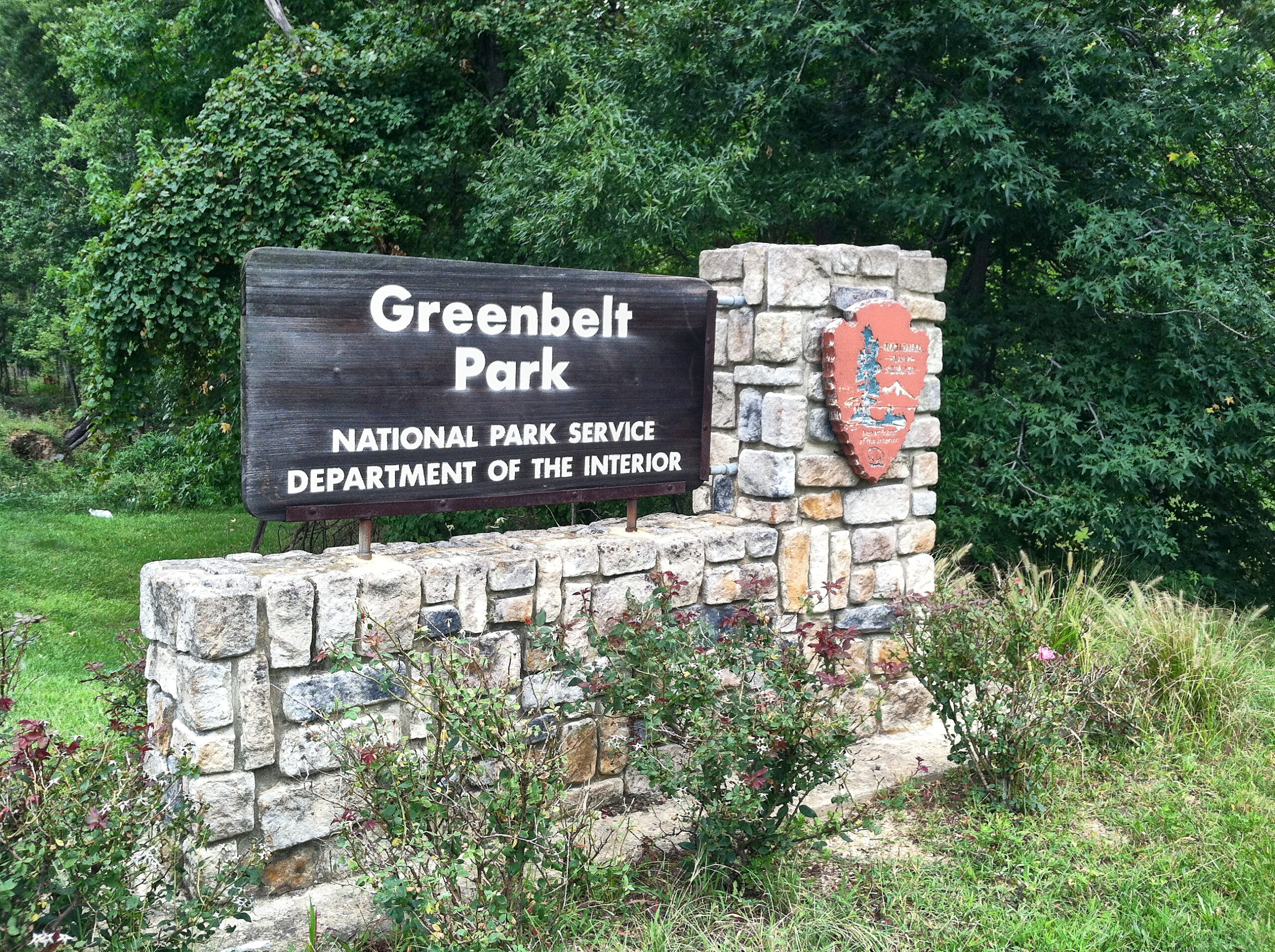
In 1824, just two years shy of the 50th anniversary of American independence, a patriot of the Revolution breathed his last on a farm in what is now Greenbelt Park. He was William Bayly, surveyor, merchant, farmer, state legislator, justice of the peace, member of Maryland’s first constitutional convention and captain of a militia company during the Revolution.
His farm here was his last home after a peripatetic life that led him from his birthplace in Fairfax County, Va., to Georgetown in Montgomery County (later Washington, D.C.), Blue Plains and Silver Hill in Prince George’s County and finally to Greenbelt, then an unnamed rural locality described simply as a place “near Bladensburg.” He became a man of great wealth and high social status, reportedly socialized with George Washington, yet spent his last years in modest circumstances. His life also illustrates one of the fundamental contradictions of the American Revolution: it won liberty for many, but perpetuated slavery for others.
Born sometime in the 1740s (sources vary), Bayly moved as a young man to Montgomery County (then still part of Frederick County), where by 1768 he was styled a “surveyor” in deeds for lands he bought and sold. When stirrings of rebellion began, Bayly joined the Patriot cause early, serving on the committees of observation and correspondence for Frederick County from 1774 to 1775. He was apparently well regarded, for he was elected to Maryland’s first constitutional convention in 1776 and later to the state legislature from newly created Montgomery County. He also was the captain of a militia company. He was often referred to as “Captain Bayly” for many years thereafter. His contributions to the Revolutionary cause are documented in the Archives of Maryland Online.
After the war, deeds described Bayly as a “merchant of Georgetown,” but the nature of his mercantile business is not clear. He was, however, an active land speculator in town lots in Georgetown and rural land in Maryland and the District of Columbia. He also owned a huge tract of land (more than 14,000 acres) in Georgia.
Bayly married Susanna Fraser Hawkins in 1769. Around 1790 they and their children relocated from Georgetown to the Potomac River plantation Blue Plains, which had belonged to Susanna’s late brother. It was a working plantation that also included a landing for the herring fishery. A ferry ran from Blue Plains over to Alexandria, Va. Newspaper ads called it “Bayly’s Ferry.”
While living at Blue Plains, Bayly was appointed a justice of the peace, which entitled him to a seat on the county court. When the District of Columbia was set off and its government established in 1801, Blue Plains fell into D.C. He expected to retain his position as a justice for the District, but he was not appointed. He wrote to President John Adams, “I feel my self very much hurt at it, and I cannot think you wou’d hurt the feelings of any man Especially one who had never Injured you, but had done every thing in his power for you. Will you be so Oblijeing [sic] as to Inform me by a line particularly on this Subject.” John Adams’ Presidential papers online do not include a reply.
At the same time, financial difficulties were closing in on him. Bayly began liquidating many of the lands he had purchased to pay his debts. One suit against him claimed that he represented himself “as a man of fortune and worth many thousand pounds beyond the extent of his debts.” In 1803 his bankruptcy was announced in Washington newspapers, and his creditors were summoned to a meeting at Semmes Tavern in Georgetown to lay forth their claims against him.
Bayly lost Blue Plains in the course of his bankruptcy. Where he lived immediately after is not clear, but by 1810 he was living at Silver Hill, Md., off present-day Branch Avenue, less than a mile south of the District line. He left Silver Hill by 1818, the year he purchased 255 acres of the tract Pleasant Hill, a long rectangular parcel of land that stretched along the east side of Edmonston Road in what is now Greenbelt Park, from Good Luck Road north to Westchester Park Drive. Here he established a farm that would be his last home.
Unfortunately, Bayly found that trying to manage a farm at his age proved to be a mistake. In a newspaper ad announcing his desire to sell the property only two years after he bought it, he candidly admitted, “I am so old and infirm that I can do nothing, nor see after any thing, which is really and truly the reason why I sell it.” Otherwise, his description of the property was glowing.
“The improvements are a comfortable dwelling house, just built, 6 rooms and 4 fire places, kitchen, barn, corn house, stables, smoke house, & a large pailed in garden, fruit of all kinds, very good. Eighty acres meadow ground, a good deal of it cleared & in timothy, sowed last fall, fire wood & fence rails in the greatest plenty. … There is now sowed on this place between 20 and 30 acres of rye, and about 10 acres of wheat, clover, and plaster, and will, in the course of next week, be sown about 20 acres of oats. All the corn ground is broken up, and a great many seeds sewn and planted in the garden.” A glaring omission is any mention of tobacco. Already the crop was losing its place of prominence in northern Prince George’s County, though some other farmers in Greenbelt kept producing it for a generation more.
So how was the cultivation accomplished on Bayly’s farm in Greenbelt Park despite his age and infirmity? The 1820 census tells the tale. By then in his 70s, he had been a widower for at least 10 years, but other members of his family still lived with him. So too, did six enslaved African Americans who presumably did much of the farm labor. Their names are unknown, as only the names of heads of households were recorded on the census schedules at that time. Like so many of the Founders from the Southern states, Bayly was deeply enmeshed in the “peculiar institution.” Ten years earlier, while he was still at Silver Hill, 18 enslaved persons were counted in his household; 20 years earlier (in 1800), 20 enslaved persons were at Blue Plains.
Bayly was successful in finding a buyer for his Greenbelt property in 1820. He soon executed a deed to sell it, but he seems to have continued to live there even after the sale. The buyer lived in Charles County and never moved to Greenbelt. Despite his reduced circumstances, reminders of his previous wealth and social position occasionally arose. In 1823, his name was invoked in a newspaper column touting the character and achievements of John Quincy Adams, then considered a likely candidate for president the following year. William Thornton, who designed the U.S. Capitol, wrote in the National Intelligencer that “the venerable William Bayly … who I know used often to visit the General [Washington], declared that he also heard the General say, he thought Mr. John Quincy Adams the most promising young man in the United States, and that the General spoke of him in the very highest terms.”
William Bayly died on March 9, 1824. His will is preserved at the Maryland State Archives. No longer owning real estate, he left his personal property to his children, specifying one gold ring to go to his daughter Mary. He also left $30 to “my poor old black man William” to be administered for his benefit by his daughter Rebecca, wife of the Rev. Walter Dulany Addison, an Episcopal priest known for his anti-slavery views. The National Intelligencer announced the sale of Bayly’s personal property, “consisting of Negroes, Horses, Mules, Cows, &c. Farming Utensils of every description” to take place on his farm on May 24. An inventory of his estate, which would name the enslaved people on his farm, was not recorded. Other than William, mentioned in his will, their names are unknown.
A year after Bayly died, the owner of Bayly’s farm sold it to Alexander Keech of Bladensburg, who renamed the property Waverly and conducted a private school there for many years. After his death, his daughters conducted a “female seminary” at Waverly until 1882. An article in the Baltimore Sun in 1907 recounted a reunion of Waverly alumnae at “the old mansion,” which by that time had seen better days. Whether that was the “new house” of Bayly’s time or a later one is not known.
Where William Bayly was buried is not documented. It is possible it was on the Greenbelt farm where he died, as was the custom of the day, but there are no records to confirm that. The notice in the National Intelligencer announcing his death was succinct: “Died, on Tuesday night last, at his seat near Bladensburg, Prince George’s County, William Bayly, Esq. in the 83d year of his age; a Patriot of the Revolution.”