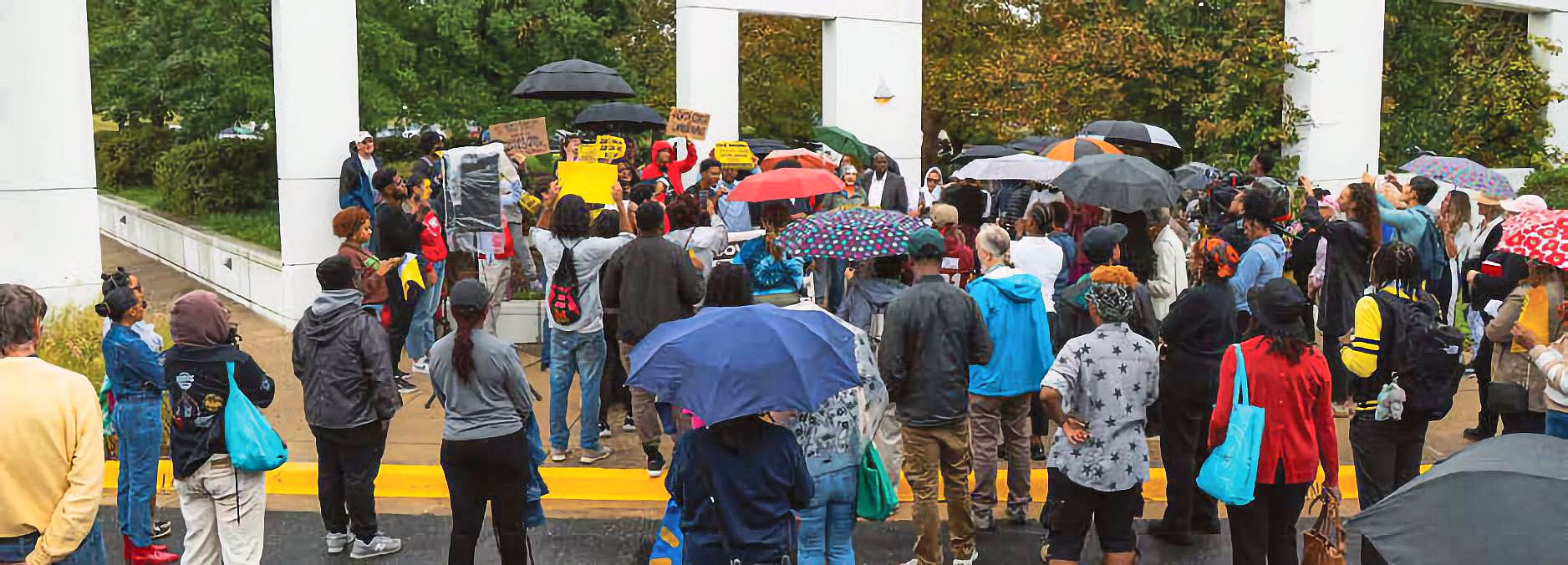
A recently proposed data center in Landover sparked protests and a desire by local communities to learn more about what data centers are, why they are important and the potential effects they can have, including on the communities where they’re built. It’s a topic currently debated by Prince George’s County Council, one that will likely be a subject of political platforms this year and has already been the topic of letters to the editor in the Greenbelt News Review. Strong community opposition to the proposed center in Landover led county officials last year to reconsider support and place a six-month moratorium on permits, which is set to expire this spring.
The advent of artificial intelligence (AI) has fueled a rapid growth in demand for data centers. AI-based computing is expected to dramatically increase energy use and this, in turn, will drive an unprecedented demand for the electricity that powers it and data centers.
What Are Data Centers?
Data centers are physical facilities that house technology like servers, storage devices and networking systems used to provide digital services and have been part of our landscapes for half a century. These facilities process, manage and distribute documents, images, videos and other information. They are important because much of what we do for work or play is done online. Each time we save an item to Google Drive or iCloud or stream a movie, we are interacting with a data center somewhere.
Many facilities being built today are referred to as hyperscale centers because they are huge. The one proposed for Landover is 800,000 square feet, which is five times the size of an average Costco store. Data centers usually have water cooling systems designed to keep the equipment cool and can use a lot of water.
Electricity Consumption
Data centers need electricity but forecasts for how much electricity they will need vary widely. In 2024, researchers at the Lawrence Berkeley National Laboratory estimated the future energy use by data centers. In 2014 these centers used 1.9 percent of total annual U.S. electricity consumption, which in 2023 increased to 4.4 percent and in 2028 the forecast is for 6.7 to 12.0 percent. A report by the International Energy Agency said that “From 2024 to 2030, data center electricity consumption [globally] grows by around 15 percent per year … four times faster than the growth of total electricity consumption from all other sectors.”
Uncertainties
Uncertainties in these forecasts are due to the rapid growth in data centers and the lack of transparency by their owners about how much electricity or other resources are used. Electricity consumed partially depends upon which AI models are used and the type of query (e.g., generating an image vs. text). New chip technologies and increased efficiencies in how data centers operate could reduce future AI-driven demands for electricity. Nonetheless, most forecasts indicate that the demand for new data centers and their associated electricity consumption will increase, dramatically in some cases.
Rapid Growth
The rapid growth of data centers is pushing utilities to find ways to increase electricity generation quickly and cheaply which may translate into continuing the use of electricity generated by fossil fuels. This threatens the commitments made by states to reduce their greenhouse gas emissions.
A report by researchers at Carnegie Mellon University projected that electricity costs in 2030 could increase by 25 percent in Northern Virginia due to the growth in data centers. Accurately forecasting electricity demands is critical because building electricity generation plants takes several years. If a utility overbuilds, then a power plant may sit idle while the cost of building that plant still gets passed onto its customers.
Effects of Data Centers
Today’s data centers are industrial-sized facilities and have a number of impacts including energy use, water use, compatibility effects, noise and air pollution. For example, according to Google’s 2025 Environmental Report, its data center in Ashburn, Va., uses about 153,000 gallons of water per day. In comparison in 2025 a U.S. family of four used about 400 gallons per day, according to the U.S. Environmental Protection Agency. Unfortunately, Google’s report did not reveal how much the Ashburn data center consumed in electricity on a daily basis.
Such large facilities are not compatible with residential areas. They need to be connected to the electrical grid, which means transmission lines that run across a wide swath of properties and substations. They also have back-up generators which, when running, will affect air quality and create noise pollution. Some data centers emit a humming noise and although it is low in decibels, its constant presence may be bothersome.
Data centers are approved at the county level on a case-by-case basis. This means one county’s approval of a data center could affect the water supply of adjacent counties or the construction of new transmission lines in neighboring counties. There is no state or federal entity considering the cumulative impacts of all these data centers.
Job Creation
A 2024 report by Virginia’s Joint Legislative Audit and Review Commission report to the state’s governor and General Assembly found data centers had a positive economic benefit and much of this “… came from capital spending during the construction phase rather than spending during ongoing operations.” At the peak of construction there could be as many as 1,500 employees. During operations a 250,000 square foot center could have 50 employees with some earning $100,000 annually. In comparison, the average Costco store is 147,000 square feet, employs 200 to 300 persons and pays an hourly worker an average of $64,000 annually.
Data centers can pay taxes into local economies, except where tax exemptions exist. For some counties in Northern Virginia this is an important source of revenue. For example, in Loudoun County the centers account for 31 percent of the local tax revenue because they are so numerous, whereas in Prince William County it is 7 percent.
Proposed Data Centers Locally
Public opposition to the data center proposed for Landover led county officials to impose a six-month moratorium on permits for these buildings. Nearby residents were concerned about potential health and environmental effects as well as the lack of transparency in the process.
The proposed data center would have 800,000 square feet and draw 300 megawatts of
electricity. A center of this size would likely consume nearly 2.5 million gallons of water each day. It was estimated that once operational it would employ 100 direct employees and provide nearly $20 million in tax revenue for Prince George’s County each year.
The county council Qualified Data Center Task Force completed a November 2025 report on data center impacts and recommendations and the moratorium is set to expire on April 30. The Maryland General Assembly is currently considering legislation that could strictly regulate data centers. The News Review sent questions about upcoming legislation and the number of data center permits in the queue to newly appointed District 4 Prince George’s County Council Member Timothy Adams. The questions were forwarded to County Public Information Officer Pete DeLuca, who said, “Legislation surrounding data centers will be shared with the public at a future date …”