Part one of a two-part story. Note: Both Black and white workers built Greenbelt in the 1930s, but only white families were accepted to live in the new town. This article does not discuss all persons, activities and letters related to 1960s Greenbelt fair housing efforts, instead providing a representative sampling. When speaking of that time, this article uses the terms “Negro” or “colored” if a person wrote or was quoted using those words in a contemporaneous source. Sources for this article are available at the end.
Dr. Leo Walder was sure he could find a Greenbelt home for his student before the student’s wedding. However, it proved more difficult than the University of Maryland professor and Greenbelt resident expected. It was 1963 and the student was Black.
Walder, wife Marcie and their children had moved to Greenbelt in 1962 and quickly settled in, building relationships through their children’s schools, in the Goddard Wives Club and the League of Women Voters, and at Twin Pines Savings and Loan where “everyone had an account.” Friends included Bob and Mary Auerbach, Bert and Marj Donn, Jan and Jean Turkiewicz and John and Pat Unger. Their professions and university degrees included a Goddard engineer, a driver for an integrated taxi company, a BARC scientist, social workers, a music teacher and an English degree.
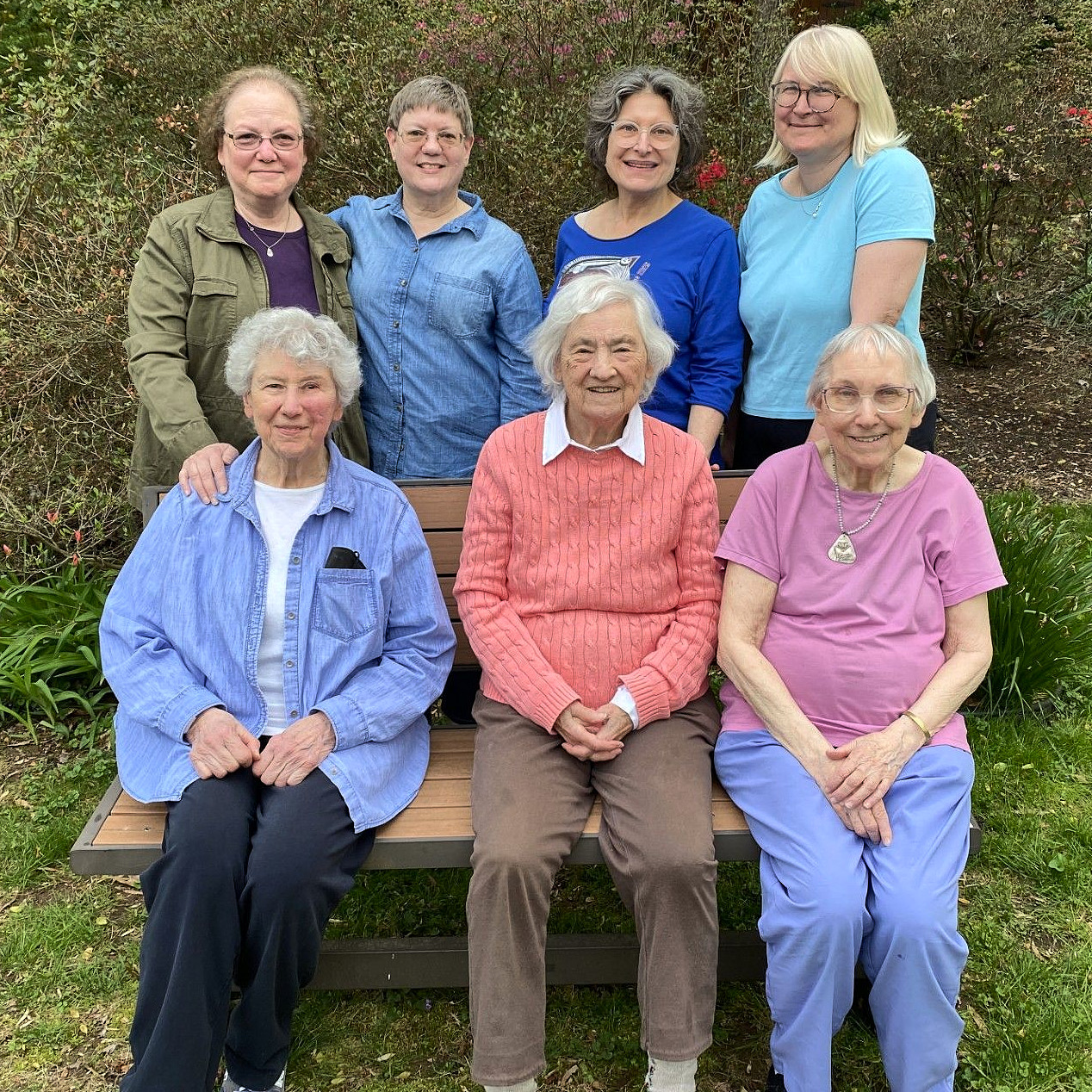
In April 2025, the News Review interviewed Marj Donn, Jean Turkiewicz and Marcie Walder, and adult children Rachel Turkiewicz Alexander, Hopi Auerbach, Marie Unger and David and Judy Walder for their memories of what followed Leo’s attempt. (See box for other sources for this article.)
August 1963
Walder found a Greenbelt apartment for the student and paid a deposit to the manager, who asked if the prospective tenants were “colored,” which he answered with “No more than you or I.” Ten days later, the manager phoned to say the apartment wasn’t available. When staff at other Greenbelt apartments told him they didn’t accept Negroes, he took the young couple to the Greenbelt Homes Inc. (GHI) sales office, whose staff showed them a North End unit. That evening the home was removed from the market.
GCFH Formation, Reactions
Leo couldn’t let it rest. The August 29, 1963, News Review noted the formation of Greenbelt Citizens for Fair Housing (GCFH) by 16 founders including the Auerbachs, Turkiewiczes, Ungers and Walders. The September 26, 1963, News Review advertised an October 2 public information meeting, with objectives including promoting community acceptance of minority group families. Speakers were from the American Friends Service Committee’s Metropolitan Washington Housing Program, the Washington Center for Metropolitan Study and Dr. Karl Gregory, described as a Negro civic leader. Gregory had been rejected as a home purchaser at Bowie’s Belair sales office, where 35 to 40 new homes were being sold weekly to whites.
The October 10, 1963 News Review reported that 200 speakers and attendees focused on integrating GHI, saying integration would come to Greenbelt “probably in the reasonable future” and “Negro families moving in would not inundate the community.” One resident said GHI applicant screening would continue to control purchasers, though his only objection would be if a “Negro” applicant were rejected solely due to color. Also discussed were studies showing property values in newly integrated areas dropped where white families departed and rose where they stayed.
A letter to the editor in the same issue from Lakewood resident Gordon Gemeny believed GCFH’s goal was GHI integration. Gemeny wrote that though he didn’t object to a few Negro families he didn’t want to live in a predominantly Negro community, nor want his sons to marry Negroes. He said GCFH should not force integration, nor use picketing or sit-ins “to generate racial tension.” He recommended surveying GHI residents to see how many would stay at various integration levels, and planning GCFH actions accordingly, to avoid seeing Greenbelt “degenerate.”
The October 17, 1963, News Review contained six letters for and against GCFH. Bob Auerbach countered Gemeny’s “idea that no Negro should move in until a substantial majority votes for integration” with “If not one person in Greenbelt wants Negroes to move in, Negroes must nevertheless be free to do so.” In April 2025, Judy Walder told Hopi Auerbach, “Your dad wrote this brilliant reply and took him point for point. He was so kind but so smart.” GCFH wrote that integrating Greenbelt wouldn’t bring ill effects if concerned citizens worked to avoid them, emphasizing their commitment to discussion and not forcing integration, preferring to avoid nearby “militant actions.” (They may have been referring to picketing and sit-ins at Bowie’s Belair by the Congress on Racial Equality (CORE).) Letters that month variously described GCFH as “a most silly and senseless organization,” recommended against a referendum or advised Greenbelters it was their choice whether to integrate with GCFH or CORE methods.
On October 24, 1963, the GHI board rejected a referendum by 5 to 2, for reasons including questionable propriety and legality and questionable validity of the results, and avoiding polarizing opinions and making Greenbelt a target for external forces.
Fair Housing Education
University of Maryland sociology graduate student Kaye Sizer Noe wrote in her 1965 thesis that resistance to GCFH was by individuals, not organized. She wrote that by November 1964 GCFH settled into educational events and engaging the city council. The News Review archives document events including a film, To Find a Home, in 1964, a property values talk and interfaith discussion of The Racially Mixed Community in 1965, 1966 talks about a proposed Maryland fair housing bill and a fair housing pledge for faith communities; a July 1966 anti-segregation motorcade between Greenbelt and the University of Maryland; and a 1967 Open Occupancy Ordinance for Prince George’s County discussion held by the Springhill Lake Democratic Club. According to Noe in 1965, such events were attended mostly by those already committed to fair housing.
Human Relations Board
GCFH began engaging city council at the November 18, 1963, council meeting to request a Human Relations Advisory Board. Such bodies were being created around the country to address housing discrimination incidents, though they were limited to mediation if the jurisdiction had no fair housing laws.
In December 1964, council heard from then-GCFH Chair Al Herling that over a year had passed since the idea was presented, and that a local board could have avoided two alleged discriminatory incidents in Greenbelt having been taken to the Prince George’s Human Relations Committee. The same month the News Review reported that two Black families had purchased Boxwood homes but not yet moved in, and four Black families had been rejected at Lakeside North Apartments.
Council established the board in January 1965, and in April 1965, Mayor Edgar Smith appointed seven members, including GCFH founder Rev. Edward Birner and realtor Abraham Chasanow, in what Smith called a cross-section of Greenbelt interests. Noe wrote that the process of creating the board raised city government and resident awareness of potential problems otherwise not officially acknowledged. The board still exists today as the Community Relations Advisory Board (CRAB).
Resistance by Realtors
Charles Bresler developed several Greenbelt neighborhoods, including Lakeside Drive’s southern end, Charlestowne Village, Charlestowne North Apartments and Boxwood. Realtor and attorney Chasanow represented Bresler legally, and operated Greenbelt Realty in the building that is now DMV Pizza. Chasanow also owned and/or operated several Greenbelt apartment buildings. One of the realty’s 1965 News Review ads said “Call us to inspect some of the 500 homes available.”
Noe wrote in 1965 that Greenbelt Realty (which sold the new Lakeside homes) claimed no Negroes had looked at them. She added that an “individual closely associated with this company testified against the proposed Maryland fair housing law suggests that Negro buyers might not be welcomed.” She wrote that GHI claimed no Negro had applied for membership, that most Greenbelt apartments had unofficial segregation policies and Springhill Lake Apartments (now Franklin Park) had an official segregation policy.
Jean Turkiewicz told a Greenbelt Museum interviewer in 2019 of picketing Chasanow’s apartments. In 2025 Marcie Walder told the News Review, “We picketed Greenbelt Realty. A lot.” Son David Walder added, “I must have been out of school sick, but not that sick, because my mom took me to picket at the realty company. It was the first demonstration I’d ever been to. It was very interesting that these committed young adults were doing their thing there. And it really was an eye opener for a little kid. I was probably 7.”
Reluctance by Blacks
Marcie remembered trying to sell their 17 Court Ridge home “to a non-white family and we weren’t successful. We finally got the message saying, ‘Forget it. We’re not going to be the first to move into this neighborhood.’” Marie Unger said her mother Pat told her one reason it was difficult to convince Blacks to move into GHI was because, “if you’re going to be the first person in your family to own a home, that’s not what you want it to look like, because it looked like government housing; they wanted single family homes.”
Resistance Becomes Personal
Jean Turkiewicz told the News Review, “We felt like outliers in Lakewood, and felt the hostility very much.” Daughter Rachel Turkiewicz Alexander remembered playing with Black friends in her yard and walking with them near her home as a child, while a neighbor pointedly watched.
Mary Auerbach told fellow GCFH members in November 1963 that on Halloween her car’s gas tank was drained and Bob’s taxicab windshield was smashed. Trick-or-treaters with their mothers skipped her door, though three months earlier had invited her daughter Hopi to their birthdays. She tied these events to GCFH and hosting friends in her yard “no matter what color their skins,” saying communication with her neighbors had ceased.
Hopi Auerbach remembered their window being shot. “My mother was at the window doing dishes and heard a noise. She found a tiny hole in the window and assumed it was because of [GCFH].” Hopi told the News Review that as a third grader “I was chased home from school and called a N—— lover. I was pretty scared when I got home.”
A July 1966 News Review reported that University of Maryland employee [and GCFH member] George Harris was struck on the head and knocked unconscious while walking to work carrying signs against apartment segregation.
Part two of this story will appear in a future issue.
Sources for This Article, Parts One and Two
Greenbelt Museum, Interview with Marjorie Donn, Barbara Havekost, Cynthia Newcomer, Lowell and Marjory Owens and Jean Turkiewicz, 2019. Greenbelt News Review (greenbeltnewsreview.com/archives). Greenbelt News Review interview of Marjorie Donn, Jean Turkiewicz and Marcie Walder, and adult children Rachel Turkiewicz Alexander, Hopi Auerbach, Marie Unger and David and Judy Walder, 2025. Greenbelt Reparations Commission, Restorative Justice for Greenbelt: A Report of Historical Harms and Contemporary Impacts, 2025, tinyurl.com/zfb88a96. Kaye Sizer Noe, The Fair Housing Movement: An Overview and a Case Study, University of Maryland College Park Master’s Thesis, 1965, tinyurl.com/4fxpkpmm. Pastor Angie Williams, interview by Emmett Jordan, 2021, tinyurl.com/48rbfnyd.