On October 19, members of the city administrative staff met with the Greenbelt City Council in a worksession to evaluate the effectiveness of the Save As You Throw (SAYT) pilot and consider program options and the budget for next year’s trash collection. With Kristen Brown, a representative of Waste Zero, which consulted with the Public Works Department to develop the pilot project, council delved into some statistics from a slide presentation they had reviewed prior to the meeting. They noted that Greenbelt compared favorably with other localities in the area with respect to landfill waste. In 2024 Greenbelt had the lowest “pounds per capita” of waste disposed (453 pounds). One of the goals of the pilot was to further reduce landfill waste both in support of the city’s environmental goals and to offset rising trash-disposal fees. In this, it was reported the program has been successful: residential trash has been reduced by 15 percent and Greenbelt’s overall landfill trash has been reduced by 12 percent.
Survey Results
Councilmember Kristen Weaver introduced the results of a recent survey which indicated that 82 percent of the pilot’s participants are “somewhat satisfied” or “very satisfied” with SAYT, while 90 percent prefer variable pricing over a flat fee (84 percent of the respondents were from SAYT households; 16 percent use the Max Trash option).
Councilmember Jenni Pompi noted that based on survey comments, a number of respondents dissatisfied with SAYT seemed to have conflated SAYT with the City’s simultaneous policy change requiring Greenbelt Homes Inc. (GHI) residents to remove trash cans from their closets or enclosures for weekly pickup.
Enrollment
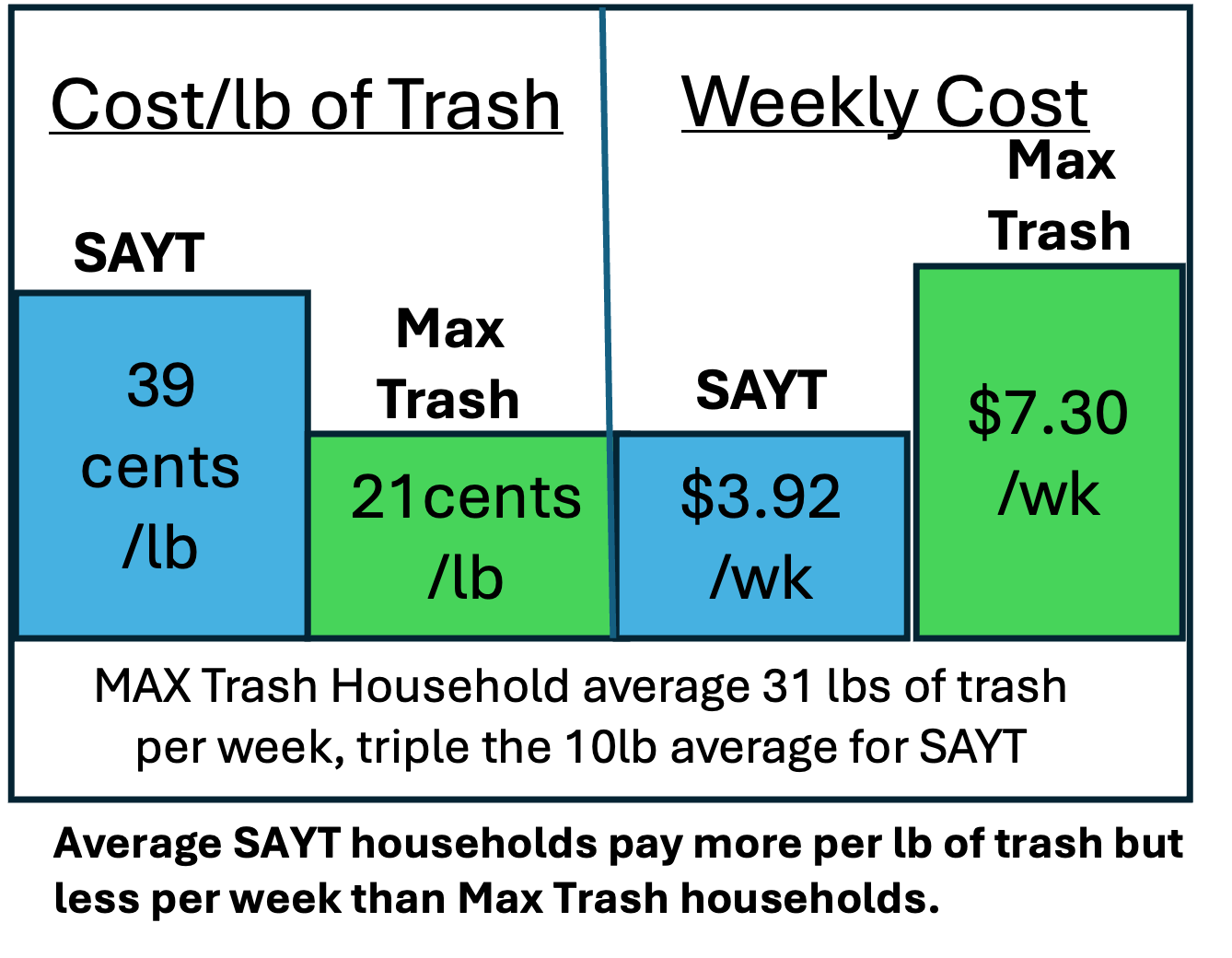
Council noted that 72 percent of households elected SAYT, 28 percent the Max Trash option. A study in March, which involved weighing the trash from each day of the week, revealed that households with the Max Trash option averaged 31 pounds of trash per week whereas SAYT households averaged 10. Although SAYT users generally pay less in total, based on the current fee structure, Max Trash households pay only 8.7c per pound of trash compared to SAYT households who pay 14c per pound on average, said Brown.
However, the News Review believes the calculations overstate the difference paid per pound because they seem to have been based on a $70 cost for a Max Trash sticker, which doesn’t include the $4.88 fee that Max Trash users pay twice a year on top of the sticker cost. Meanwhile the calculations do include the vendor overhead that is included in the bag price for SAYT users.
Proposed Modifications
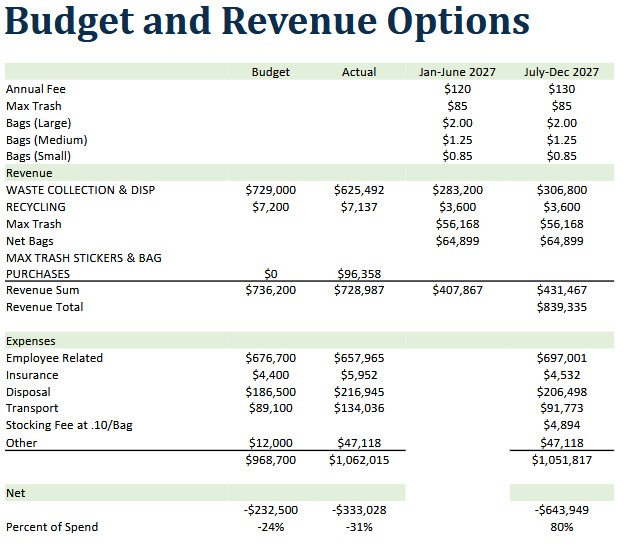
The popularity of the pilot program and the cost inequity between SAYT and Max Trash households, as well as the projected increased dumping fee to $95 a ton in July 2027 are primary factors in proposed adjustments to the program and the budget proposal presented to council. The city proposed that the SAYT program be continued with the following modifications: 1) the cost of the Max Trash option be increased from $70 to $85 semi-annually to make it more equitable with the calculated cost per pound to SAYT users and 2) the base fee be increased from $240 to $260 in July, which coincides with the county landfill price hike. In this budget scenario, the residential trash collection fees would pay for 80 percent of the overall trash collection budget. The balance, including collection of municipal and parks trash, would be paid by the city from its general fund.
More Consideration Needed
Councilmember Amy Knesel strongly objected to the budget proposal on the grounds that raising the Max Trash rate by $50 a year (considering the semi-annual fee and base rate increase together) was unfair. She requested to see other budget options, including returning to a universal base rate, before council would take up a proposal. Assistant City Manager Timothy George agreed to develop additional budget options for council to consider.
Sustainability Coordinator Luisa Robles noted that the composting program also helped offset landfill trash, but membership has fallen off since the city reduced subsidies. It was noted that members of the composting program pay $120 a year — nearly as much as the Max Trash sticker cost. Tom Taylor presented some options for council consideration: to use surplus funds in the current program to attract new members to the composting program and/or reduce rates. Council will consider the options in a future budget worksession.