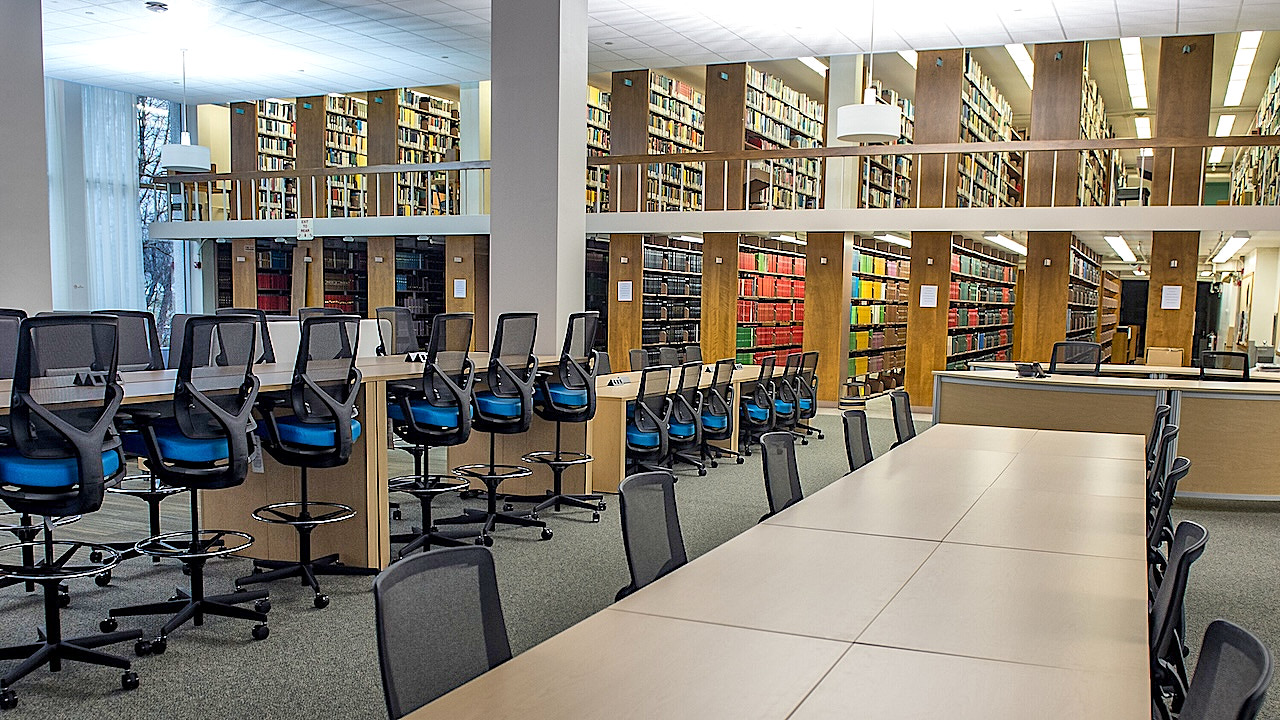
Goddard Space Flight Center (GSFC) was home to NASA’s largest research library. However, its operations were paused on December 9 for a 60-day review and on January 2 the agency announced it would close the library. Officials’ statements claim nothing of importance will be lost and point to digital resources but NASA employees say the loss could be profound. Meanwhile Goddard Engineers, Scientists and Technicians Association (GESTA), the employee union which had an agreement specifically ensuring the maintenance of the Goddard library, was stripped of recognition by President Trump’s Executive Order (EO 14343) excluding NASA from unionization rights to “enhance” national security. Critics of the closure say the administration is taking advantage of the period without union representation, which is currently the subject of a court case, to close buildings and now the campus’ library.
Administrator’s View
On January 2, new NASA Administrator Jared Isaacman posted on X that though the physical space is closing this has long been planned and part of consolidation approved in 2022. NASA researchers will continue to have the scientific information and resources they need and the materials will be evaluated, digitized and transferred to other libraries or “otherwise preserved for historical purposes.” However, those on site paint a different picture, alleging that they have been denied the chance to lobby for the preservation of the material they need, refused the opportunity to bring in subject-area specialists to speak to librarians about items and documents of importance to their missions and they’ve been told that digitization is too costly. Two Goddard employees who spoke separately to the News Review said they are told only 10 to 15 percent of the library’s documents will be preserved.
The News Review asked Goddard’s News Chief Rob Garner if he could tell us what percentage of the library’s holdings will be preserved through digitization, if he could speak to whether that had been deemed too costly and if subject-matter experts were involved in the review. We also asked if Goddard has data about how much the library was being utilized by Goddard employees prior to its closure for 60-day review. Garner responded, “At this time, we’re directing inquiries on the library to Administrator Isaacman’s post on X.”
Agreement with Unioin
Almost 15 years ago, in October 2011, leaders attempted to close the Goddard library and “transition to electronic services.” However, in April 2012 GESTA filed an Unfair Labor Practice Charge and in October 2012 NASA agreed to reopen and maintain the Goddard library, ensure employees have access during their workday and to give written notification of any proposed changes or decisions impacting it to the union. Though Isaacman’s statement says the closure was approved in 2022, the union, which was only suspended in August 2025, had never been notified of this. The library is housed in Building 21, which is not one of the buildings slated for closure in the master plan for Goddard that was released in 2022.
Significance of Closure
The loss of a physical library doesn’t signal modernization or an era of digital access to resources, complained employees we spoke with. In fact, their access to online journals and research has been reduced in recent years, said two. “They’re cutting/unsubscribing from scientific journals, and have done since the start of [last] year, so we cannot read scientific journal articles online from places like SPIE or IEEE,” said K, a co-op scientist. About accessing the library’s resources online going forward, K reported that officials who were asked about digitization responded that it is “just too expensive.” “This is just another step in the path Goddard has been walking [for a] year: reduce capacity, reduce capability, reduce costs or expenses,” said K. Those in charge have said they’ll only subscribe to the most used journals but some subscriptions were cancelled last year without notifying the users, he said. “One can imagine that aerospace engineers want to read different journals than heliophysicists but that they might both be working on the same space telescope project,” he said. As a co-op scientist, K has access to journals through the university he is affiliated with. It’s much harder for his civil servant colleagues, he said, who ask him to get articles for them or ask the GSFC librarians to get copies from elsewhere, which can take days. “Sometimes, when you are doing research, you think a particular article is what you need, but then you read it and realize it isn’t. Normally that’s a 20-, 30-, 40-minute exercise,” said K, “now … that could take days.” Though K isn’t as impacted because he has other access routes, it’s still more time consuming and inconvenient and involves him switching VPNs, for example.
Access to Resources
A civil servant we spoke with said he needed to consult the library regularly, using journals and historic papers in his research. Some are rare and only at the Goddard Library and others can be accessed through mechanisms like interlibrary loan but that adds unreasonable delay for those working to tight flight deadlines, he said. At one point Goddard employees had access to University of Maryland online resources, including journals, but that arrangement ended some time ago, said the civil servant, leaving Goddard more heavily reliant on their own library and subscriptions. Historic documents are important, he explained, because some of their work involves drawing on technology and work that hasn’t been done since the space race, for example. When there are decades between missions, when analog technologies of the past can be used in space, the library offers an invaluable repository of questions and findings from those who worked on similar problems decades ago.
The civil servant we spoke with says their request for subject-matter experts to be consulted as library materials are assessed was rejected. Librarians are currently making the call on what to keep, he said. Ninety percent of the holdings of the library are being excessed, he was told, and it was even suggested that the engineers and scientists might be able to purchase the materials they want if they’re auctioned off. Fortunately, there’s a repository of journals and research nearby at the University of Maryland, but he says there isn’t time during his workday to drive there, and he knows he won’t be paid for his time at the university library to research and scan or print documents as a member of the public at the weekend.
NASA scientists will suffer even more from the loss of the library, said the civil servant. The scientists are at least partially funded by grants and deeply involved in cutting edge research. They’re expected to regularly publish in journals that they’re losing ready access to as the library closes.
Senator’s Concern
Senator Chris Van Hollen, ranking member on the Subcommittee on Commerce, Justice, Science, and Related Agencies, expressed concern for Goddard to the News Review on Tuesday. “Given that the Trump Administration spent the last year attacking NASA Goddard and its workforce, I remain deeply concerned that their consolidation efforts will hamper NASA’s ability to explore space, deepen our understanding of earth and spur technological advancements that make our economy stronger and nation safer. It’s critical that NASA employees retain access to the research materials they need to conduct their important work. I will continue to closely monitor the actions this Administration is taking to determine whether Goddard’s dedicated scientists and researchers have the materials they need to fulfill their critical mission,” said Van Hollen.