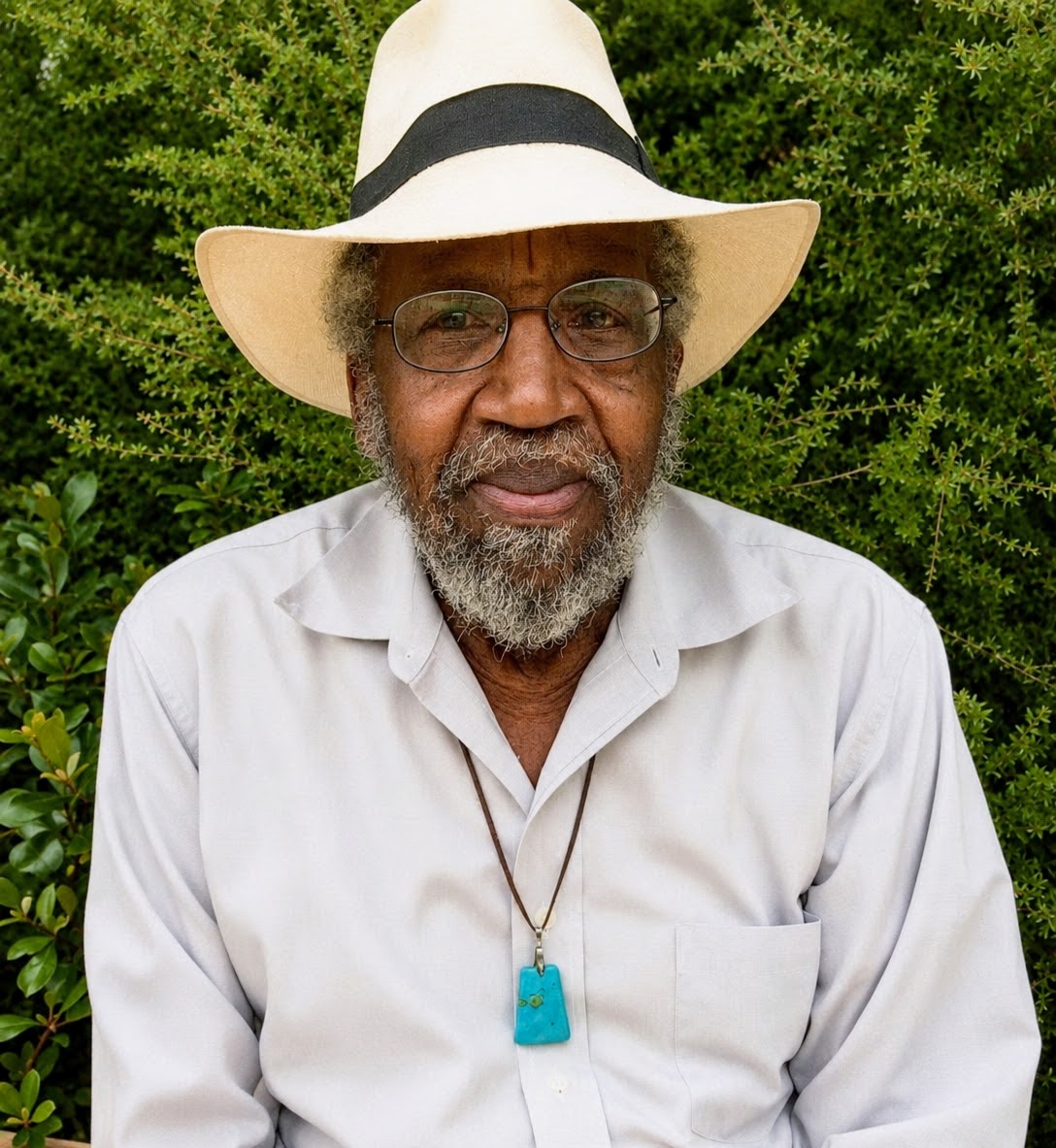
John Henry Jones, 98, of Greenbelt, died peacefully on June 11, 2026, surrounded by family and friends.
Born May 6, 1928, in the coal mining town of Houston, Penn., he was the youngest son of Hillery Hubbard Jones and Albertha Napper Jones.
The generations are long in the Jones family, as John Henry’s father was born in 1873 and his mother in 1886. His father was a coal miner who trained mules to carry the coal out of the mines, a veteran of the Spanish-American War who also served in the Philippines in 1900 and a great sportsman, hunter and fisherman. He and his wife Albertha created a bountiful garden in the yard of their house on McNutt Street to help put food on the table for their six children.
John Henry’s family was large and loving, and his beloved nieces and nephews have remained connected with him over the past century.
John Henry’s siblings, nieces and nephews are Leon Harper Jones (Virginia Oliver) and Carmelita; Hillary Nitchell Jones (Alice Davenport), Vivian, Wanda and Rita; William Leonard Jones (Bessie Price), Carla, Wilma, William, Jaylinn, Leon and Sheryl; Laura Jean Jones Salter (Bryant Salter Sr.), William, Bryant Jr., Robert, Margretta Bernice Jones and Diana.
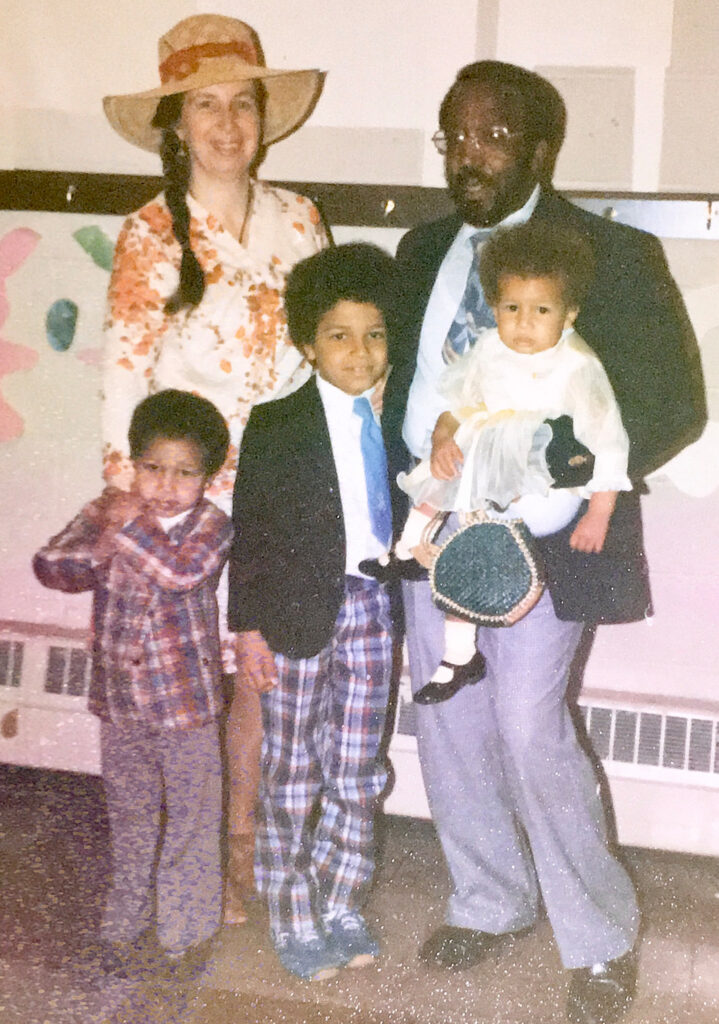
John Henry shared 48 incredible years with his loving wife, Elaine Dorothy Dietz Jones, after marrying on May 1, 1971, at Hope Lutheran Church, College Park. They raised three children together in a small apartment in Greenbelt’s Lakeside North community (Nicholas Adam, Nathan Peter and Corita Kate).
They were Pops and Granny to their grandchildren, and called Mom and Dad by so many of the college students and younger couples that lived in Lakeside North, many of whom became lifelong friends.
Although the small town of Houston, Penn., was a community of immigrants from all over Europe who came to work in the coal mines, the nearest Black family to his own lived about two miles away. Since Houston was too small to have a high school, John Henry graduated from Canonsburg High School in 1947, where he set records running the high hurdles on cinder tracks.
During high school, John Henry worked as an assistant to the town’s undertaker, driving the hearse to western Pennsylvania mountain towns. After graduation, he went to work in a steel mill, riding the streetcar 12 miles to and from Pittsburgh. He recalled that the conductor would wake him up after long shifts and the long ride, saying, “Jones! You’re home!”
John Henry’s life began to change when Uncle Sam “invited” him to join the U.S. Army as a draftee in 1950. Stationed in a Military Police unit at Camp McCoy in north-central Wisconsin, where they did cold-weather training for the Korean War, he gained his first experience with hospitals as he had to pull duty in a mental hospital. One of his most vivid memories was coming back from weekend leave to find that the barracks had been transformed overnight by the integration of the U.S. military.
John Henry returned to Houston and the steel mill, but four years later, he traveled to Washington, D.C., for a vacation and to look for a better job. He started his career as a GS-1 nursing assistant at St. Elizabeth’s Hospital (St. E.’s), where he received further education and training, gradually assuming jobs with greater responsibility. In 1960, John Henry became the first industrial therapist at St. E’s, working in Vocational Rehabilitation in the Mental Health section until 1970.
He transferred to the Children’s Center in Laurel to create a research program to bring the mentally challenged into the community. He was responsible for determining if the adolescent patients could become a part of the community rather than being institutionalized. The core objective of the program was to close down the section and, “We did!” he said, proudly.
While working during the day at the Children’s Center, John Henry worked night shifts at the Howard University Psychiatric Ward as a recreational therapist for their rehabilitation training program. After his work for the Children’s Center unit was completed, John Henry returned to D.C. to work in the Rehabilitation Services Evaluation Center with alcoholics and people with physical or mental disabilities to help them transition back into the community. His experience and training enabled him to work with clients and employers, utilizing his strengths of conversation with people from all walks of life.
As he retired from his long career working in mental health in 1995, John Henry was proud that the person hired to replace him required a doctorate degree in psychology. His supervisors were not sure they could ever find anyone who knew as much about working with people as John Henry Jones.
John Henry met Elaine in 1969. Elaine was the head psychiatric nurse at St. Elizabeth’s and lived in Greenbelt. “I married her and moved to Greenbelt,” he said. They were one of the first interracial couples to be married in the state of Maryland after the landmark Supreme Court decision, Loving vs. Virginia. Elaine said that after a year she asked John where he would like to move. “I like it right here in Greenbelt,” he told her.
John Henry was involved in and a leader for many Greenbelt activities, such as the Little League, coaching Boys and Girls Club soccer, chaperoning school field trips, and helping with local Boy Scout and Girl Scout troops. He was a carrier dad, granddad and carrier himself for the Greenbelt News Review for decades; his grandson Kai carries on the family tradition as the News Review’s circulation coordinator.
John Henry served on the Eleanor Roosevelt High School (ERHS) PTA and was a longtime supporter and fan of women’s soccer and basketball at ERHS and at the University of Maryland. He earned the beloved nickname “Doc Jones” while coaching Greenbelt soccer. He was known for carrying a first-aid kit and rushing onto the field to care for an injured player, whether they were from Greenbelt or an opposing team.
One of John Henry’s greatest loves was gardening, a passion which he poured himself into after his retirement. John Henry was a master gardener, having learned how to cultivate flowers, vegetables and plants from his parents as a child and from close friends at the St. E’s greenhouse. He convinced the Lakeside North apartment manager to allow him to create a vegetable and flower garden in the backyard behind 402 Ridge Road, and he expanded his gardening footprint with a large plot at the top of Ridge Road.
When John Henry and Elaine bought their first house in the early 1990s, a GHI end unit on Ridge Road, he became involved with the larger Greenbelt gardening community and the gardens at Hamilton Place. He maintained a large plot there for three decades and nurtured not only his flowers and veggies, but new friendships. John Henry became the president of the Greenbelt Garden Club and the members affectionately named the garden Henry’s Hollow in his honor.
In his 80s and 90s, John Henry was an active leader with the Golden Age Club, serving as a charismatic bingo caller, planning monthly birthday celebrations and leading club members in singing “Happy Birthday” with his deep bass voice. He was known for calling to sing to members on their birthdays. For several years, he was the Club vice president and chair of the nominating committee for elections. Earlier this year, the Golden Age Club presented John Henry with a lifetime membership award in honor of his passionate dedication to the club.
John Henry enjoyed delivering Valentine’s Day cards to his Greenbelt friends and neighbors, participating in Community Center programs, volunteering at the Greenbelt Museum and being a GHI Court liaison. John Henry also helped the Co-op Grocery Store recruit new members on the first Wednesday of each month. “I believe I got some people to move to Greenbelt that way,” he says.
He was named Greenbelt’s Outstanding Citizen in 2012, and was long known as the city’s “Ambassador” and “Unofficial Mayor” to recognize his civic involvement, community service and contributions to the Greenbelt Community;
“His warmth and spirit make him a pillar of our community,” recalled Greenbelt Mayor Emmett Jordan.
John Henry was also a pillar of his beloved Hope Lutheran Church, serving as an usher, communion assistant, lector, grill master, baby-burper, council member and advisor to pastors across the decades. John Henry’s memorial service and celebration of life and legacy took place June 20 on the same grounds where he and Elaine married 55 years ago.
John Henry and Elaine lived their lives to the fullest and with love, a legacy that lives on in their children, grandchildren, great-grandchild, and in all of the people who knew them and were impacted by their love and friendship. They formed friendships that have lasted to this day with people of all ages and backgrounds.
John Henry was lovingly cared for by Ade, Merci, Law and Jariatu (“G”) over the past seven years, enabling him to live and thrive in his Greenbelt home throughout his 90s.
John Henry and Elaine are survived by their children and their families: Nicholas Adam Jones (Jennifer Carter-Jones), Madelyn Elena and Elias; Nathan Peter Jones (Yolanda McCray Jones), Leandre Deshaun and Jayden Daniel; Corita Kate Jones Waters (Andrea Waters), Kai Henry and Maeve Jillian; and John David Jones, deceased (Marie, deceased), Paige Rezel Brooks (Hakeem Brooks) and great-granddaughter Eliyanah.
In lieu of flowers, the family welcomes donations to the John Henry Jones Memorial. They plan to place a memorial bench and plaque in Henry’s Hollow and to establish a Greenbelt community memorial fund in his honor. Donations may be made online at gofundme.com/JohnHenryGreenbelt.
Our families extend our profound thanks to the people of Greenbelt — a one of a kind community with people from all walks of life — and to the countless friends of John Henry and Elaine for the connections you formed and maintained with our family over decades, time zones and generations.
Thank you for your thoughts and prayers for Dad, for calling, visiting and sending letters and refrigerator magnets. That is what he loved so much. He liked to say, “Love. Always Remember Love. Love Grows.”
We ask that you all continue to share your stories and memories with us and with one another. It’s exactly what John Henry would want us to do.