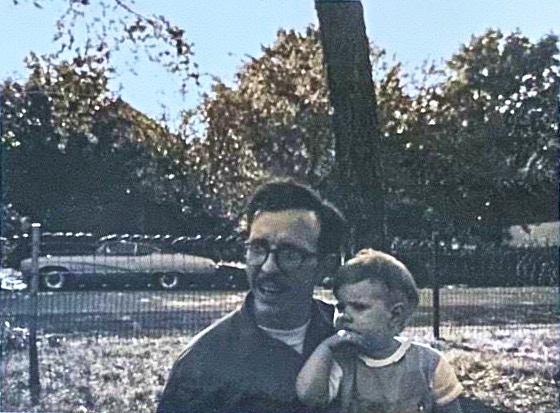
Patrick Ready grew up in Greenbelt and lives here still. He was in the first graduating class at St. Hugh of Grenoble Catholic Elementary School, then attended DeMatha Catholic High School. He attended the University of Maryland, but left after a semester and joined an electrical apprenticeship. Over his career as an electrician he worked on many jobs, including industrial sites such as a Coca-Cola canning plant. He retired in 1997.
When he started his job at the Kennedy Center, where he spent almost three years, it soon became the most interesting job of his 37-year-long career. “The nature of construction work is that you’re not really drawn to a job,” Ready, 86, told the News Review. “I took this one because it was hiring at the time, and it just turned out to be one of the most interesting.”
Design Adjustments
The Kennedy Center had been under construction for about two and a half years when Ready arrived in 1969. Re-engineering never stopped, Ready said. The introduction of jet traffic at the nearby Washington National Airport meant engineers had to build the main performance spaces of the Kennedy Center ― the Opera House, Eisenhower Theater and the Concert Hall ― to mitigate the external sound. They constructed the spaces within additional walls, with about a five-foot air gap between those and the external walls. Then, when the bust of John F. Kennedy arrived for the Grand Promenade, Ready recalls having to add floor supports because the floor had no provision to support the bust. Over time, many changes were made within the building to support marble, chandeliers and other gifts donated by foreign governments.
Ready said he mostly worked in the Opera House, pulling cable, setting switchgear and hanging fixtures. He was on the crew installing a gift from a foreign government, a massive crystal chandelier, behind the presidential suite in the reception area, when he was ordered to stop the installation. The crew had to take down what they had installed because the ceiling needed to be reinforced. The chandelier had to be redesigned as well to make it lighter, ensuring the ceiling could support it.
While he was on a standby crew monitoring the HVAC system near the end of his time there, he watched rehearsals between his rounds. “One of the big bonuses was being able to observe the rehearsals and see not only how they put together a show, but how it fit into the work we were doing,” Ready said.
He watched rehearsals from the Opera House mezzanine, including Leonard Bernstein leading the cast of Mass, the Center’s opening performance in 1971.
Pride in a “Renaissance”
During his years at the Kennedy Center, he watched the building come together. The National Symphony had played at Constitution Hall and The Washington Ballet at Lisner Auditorium: the new Center brought them under one roof. This signaled that the nation’s government valued the arts; he felt proud to see it all come together.
“It was kind of a Renaissance period,” he said. “I was just proud to be a part of that.”
After he retired, he worked in community theater.
Kennedy Center’s Future
Since early in his second term, President Donald Trump has taken great interest in the Center and following major changes on its board instituted by him, he was named chair. In December 2025, the board voted to add Trump’s name to the Center, renaming the institution the Donald J. Trump and the John F. Kennedy Memorial Center for the Performing Arts. In May a judge ruled adding Trump’s name to the institution’s title and to the building was unlawful.
On February 1, Trump announced a two-year closure for renovations of the Center. This year the Washington National Opera left after more than 50 years in residence.
Ready agrees that the building has some problems, such as water leaks which were a known issue when he was working there. He says the building would need constant upkeep, but it troubles him to see a shift from fixing the issues with maintenance to closure and talk of possible demolition.
“The Center is not just another box that you can tear down and replace, like an apartment house or a warehouse,” Ready told the News Review. “It is an institution.”
Ready thinks the building’s troubles began with its construction, a design that kept changing to meet the needs of the donations and demands of the airport years ago. He worries about the donations he helped install, since he already heard some objects have been removed. It has been about 15 years since Ready visited the Kennedy Center, and even though he doesn’t know the current state of the building, he hopes that it can be improved instead of removed and replaced.
“I would just hate to wake up one morning and find that the concert hall had been demolished, or that the marble facing had been removed, and the building was going to be just demolished,” Ready said.
Claudia Stuart is a University of Maryland student at the Philip Merrill College of Journalism interning with the Greenbelt News Review.