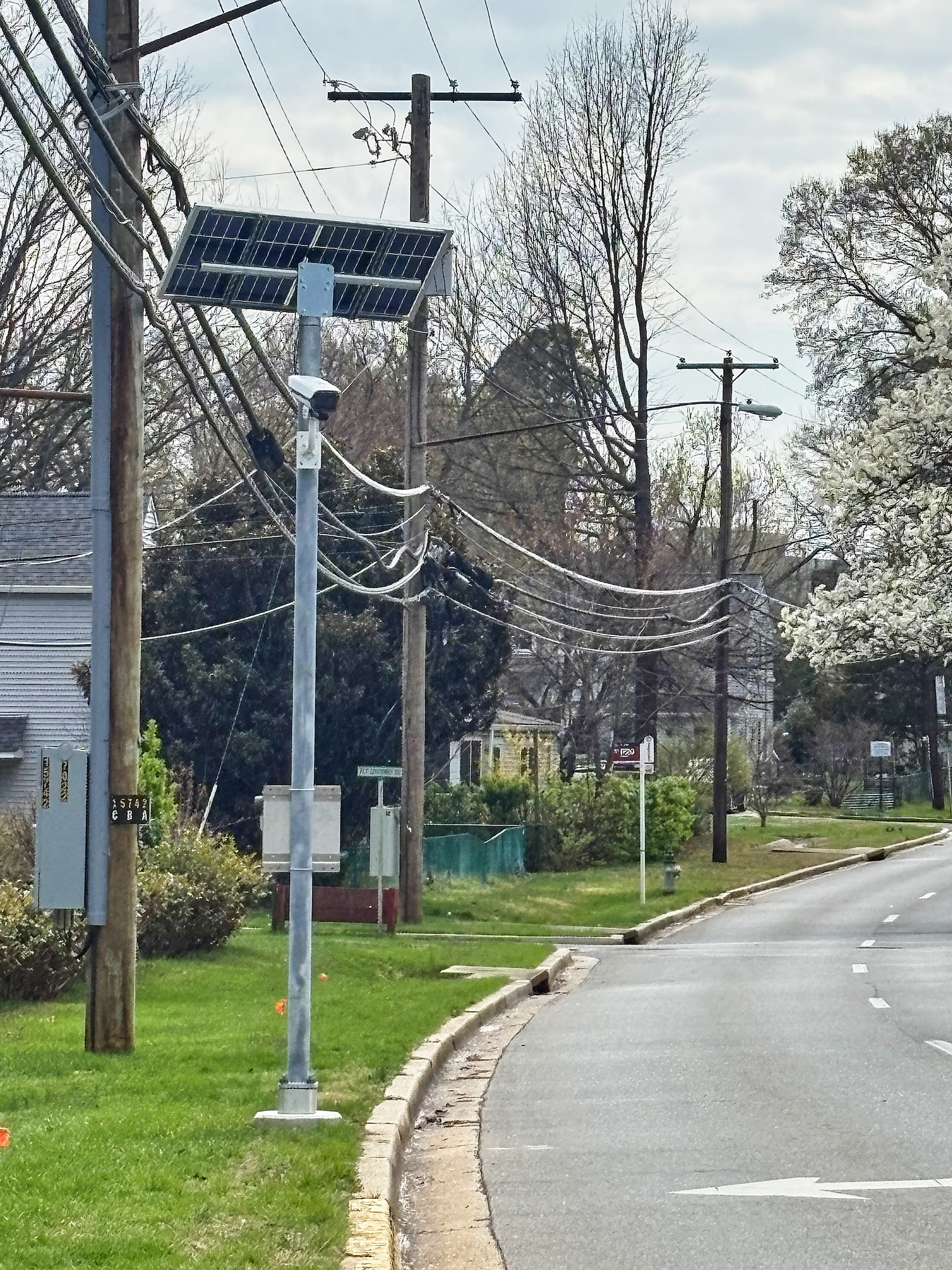
The City of Greenbelt is conducting a warning phase for its new automated stop sign enforcement program from April 1 through April 30, with citations to follow after the initial rollout.
The cameras, recently approved by the Greenbelt City Council, were installed at six intersections across the city. Officials say the program is intended to improve compliance with stop signs and increase safety for drivers, pedestrians and residents.
Locations include Southway at Ridge Road, Ridge Road at Gardenway, Ridge Road at Laurel Hill Road, Cherrywood Lane at Breezewood Drive, Springhill Drive at Edmonston Road and Springhill Drive at Cherrywood Lane.
During the warning period, drivers who fail to stop will not receive citations. Instead, the city will issue warnings in an effort to educate drivers and reduce violations before enforcement begins.
Potential Violations
The system identifies potential violations by measuring a vehicle’s speed as it passes through an intersection. While state law requires a complete stop, the city has set a 4-mph threshold to determine when a violation is issued. Each potential violation is then reviewed by a city employee before a citation is issued. Violations captured by the cameras will carry a $40 fine. Drivers who come to a complete stop at or before the stop line will not be cited. State law requires drivers to come to a complete stop at the stop line or, if none is marked, at the near side of the intersection.
According to the city, the cameras are limited strictly to enforcing stop sign violations under Maryland law. They cannot be used to cite drivers for other offenses such as failure to use a seatbelt or distracted driving.
Vendor
The city confirmed that the vendor operating the system is Obvio, which installs, maintains and operates the camera system under a contract with the city. Obvio also operates automated traffic enforcement cameras in College Park. Under the agreement with Greenbelt, Obvio owns and manages the camera equipment and processes violation data, while city officials make the final decision on whether a citation is issued. The contract allows for multiple cameras to be installed, though only a limited number can be active for enforcement at any given time. The contract was presented to council on January 28.
Data Handling
The agreement also includes provisions for data handling and review. Violations are first processed by the vendor and then reviewed by an authorized city employee before being approved. City officials said data collected by the cameras can only be accessed for stop sign enforcement purposes. Under a 2025 state law, a subpoena or warrant is required to use that data for any other purpose.
Costs
Financially, the program is structured so that program costs are recovered through citation revenue. Under the contract, the vendor is paid $8.50 for each processed violation, along with $1,000 per month for each active camera, with the remaining citation revenue going to the city. The News Review estimates that with the city keeping $31.50 from each citation they would need to issue a minimum of 32 citations a month to cover their costs. The contract defines processed violations as those prepared and ready for approval, which means the city could stand to lose money ($8.50) every time it declines to issue a citation that is processed by the cameras.
The initial contract term runs for 12 months from installation, with the option to renew annually. The announcement drew nearly 50 comments on the city’s Facebook page, with residents showing support for stricter enforcement and skepticism about the need for cameras. Greenbelt officials say the program is expected to reduce crashes and improve pedestrian safety.
Stephen Lotz is a University of Maryland Philip Merrill College of Journalism student interning with the Greenbelt News Review.