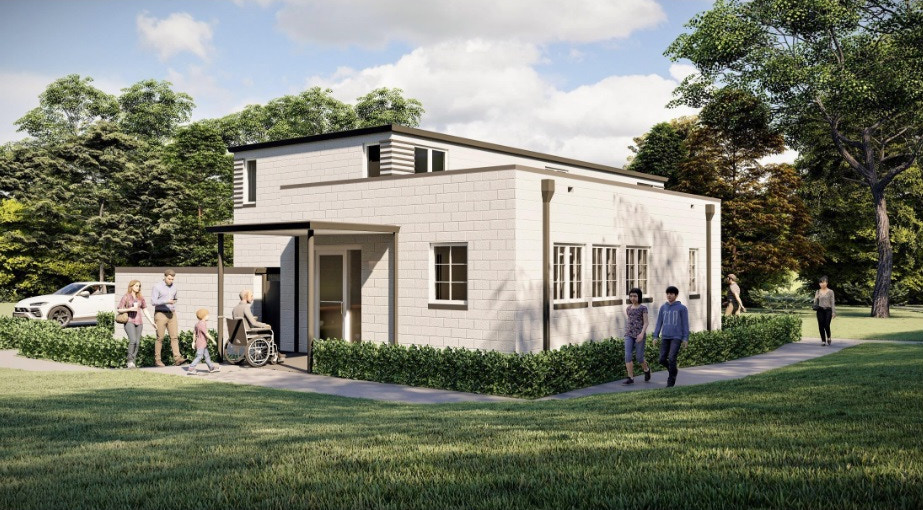
The Greenbelt Museum is continuing efforts to expand and renovate its facilities through the redevelopment of the neighboring property at 10-A Crescent Road, a project museum leaders say will significantly improve visitor access, educational programming and community engagement.
According to Friends of the Greenbelt Museum (FOGM) board member Mary Sies, fundraising for the project began before the start of the Covid-19 pandemic after Museum leaders recognized the opportunity to transform 10-A into a larger, more functional visitor and education center. Although the project has faced delays caused by the pandemic, rising construction costs and lengthy planning efforts, Museum officials say important milestones have already been achieved.
The Museum currently operates out of historic 10-B Crescent Road, an original 1937 Greenbelt residence restored to reflect daily life between 1937 and 1952. While the Museum has been an important cultural and educational resource, the 836-square-foot house limits the Museum’s ability to host visitors, exhibits and interactive programming.
Museum Director Megan Searing Young described the historic house itself as the Museum’s most important teaching tool, but one that is difficult to fully interpret without additional visitor space. Currently, Museum operations are split between the historic house and offices at the Community Center, which can create confusion for visitors. The existing house also presents challenges, including the lack of an accessible restroom on the first floor.
Renovation Plans
The renovation project would transform 10-A Crescent Road into a new Education and Visitor Center while preserving the historic character of the Museum. Plans for the building include an accessible first-floor entrance, orientation and exhibition space, a hands-on learning lab, an accessible restroom, expanded gift shop space, archives and storage, Museum offices and a 24-hour information kiosk featuring Greenbelt history and local attractions.
FOGM President Justin Donaldson said the redesign will allow the historic house at 10-B to remain largely untouched. “It’s important to keep those things in the Visitor Center, so the Museum house itself can be preserved in its original appearance and give visitors the most immersive experience as they tour the home,” Donaldson said.
The historic house will receive only limited upgrades, including the installation of a new HVAC system. Once completed, the expansion is expected to allow the Museum to increase its operating hours and offer programming several additional days each week.
Hands-on Experiences
Museum leaders say the new space will create opportunities for more hands-on educational experiences that help visitors understand daily life in early Greenbelt. Potential programs could include demonstrations of hand-washing laundry, mending and darning clothing, cooking with World War II rationing guidelines and allowing visitors to wear period clothing.
Museum staff believe these experiences help connect modern audiences to larger themes such as affordable housing, community planning, the Great Depression, World War II and suburban development.
Donaldson noted that the Museum also serves as an important ambassador for the city itself.
“Many of the visitors I encountered were interested in living in GHI and visited the Museum first to learn about the town,” Donaldson said. “In that way, the Museum staff and volunteers are ambassadors for modern-day Greenbelt, as much as the town’s past.”
Funding
Funding for the project has steadily progressed despite rising costs. The project’s original pre-pandemic estimate was approximately $575,000, but inflation and increased construction costs have pushed projections closer to $675,000. “Since the original estimate, the cost of materials has risen along with gas and inflation,” Donaldson said.
According to Donaldson, FOGM and the Museum itself have raised approximately $330,000, while the City of Greenbelt has committed an additional $300,000 toward the project. State funding has also played a critical role. The project has received two grants from the Maryland Historical Trust totaling $150,000, in addition to a state municipal bond and state appropriation.
“State grants are essential for the 10-A project,” said Donaldson.
While funding for the building itself is nearing completion, Museum leaders say additional fundraising will still be needed to support exhibits, programming and staffing for the expanded facility. “It doesn’t do you any good unless you do something with it,” FOGM board member David Aylward said, referring to the new Visitor Center. “The thinking is to take it to [the community] as well.”
Next Steps
The Museum and the city are currently exploring hiring a project manager to oversee the next phase of the project. Several major steps remain before construction can begin, including final fundraising efforts, hiring contractors, obtaining permits and removing the existing addition at 10-A Crescent Road.
Museum officials acknowledge the project could require temporary closures during portions of construction, but leaders remain optimistic about completing the Visitor Center in time for Greenbelt’s 90th anniversary celebration in 2027.
Community Outreach
Community outreach will continue throughout the process. Museum representatives plan to share updates through Greenbelt News Review articles and information tables at the Greenbelt Farmers Market this summer and will organize open houses and community events. Residents are also encouraged to visit the Museum, volunteer and support future fundraising campaigns.
“If folks in the community want to support the project,” said Donaldson, “we encourage everyone to visit the Museum and watch for future events and donation opportunities.”
Cam Crossett is a University of Maryland graduate student at the Philip Merrill College of Journalism interning with the Greenbelt News Review.