On Tuesday, July 7, leaders from the National Aeronautics and Space Administration (NASA) and the U.S. Fish and Wildlife Service (USFWS) convened with other officials in the area of Goddard’s campus known as Area 400 for a ceremonial transfer of the approximately 105-acre plot from NASA’s Goddard Space Flight Center (GSFC) to the USFWS.
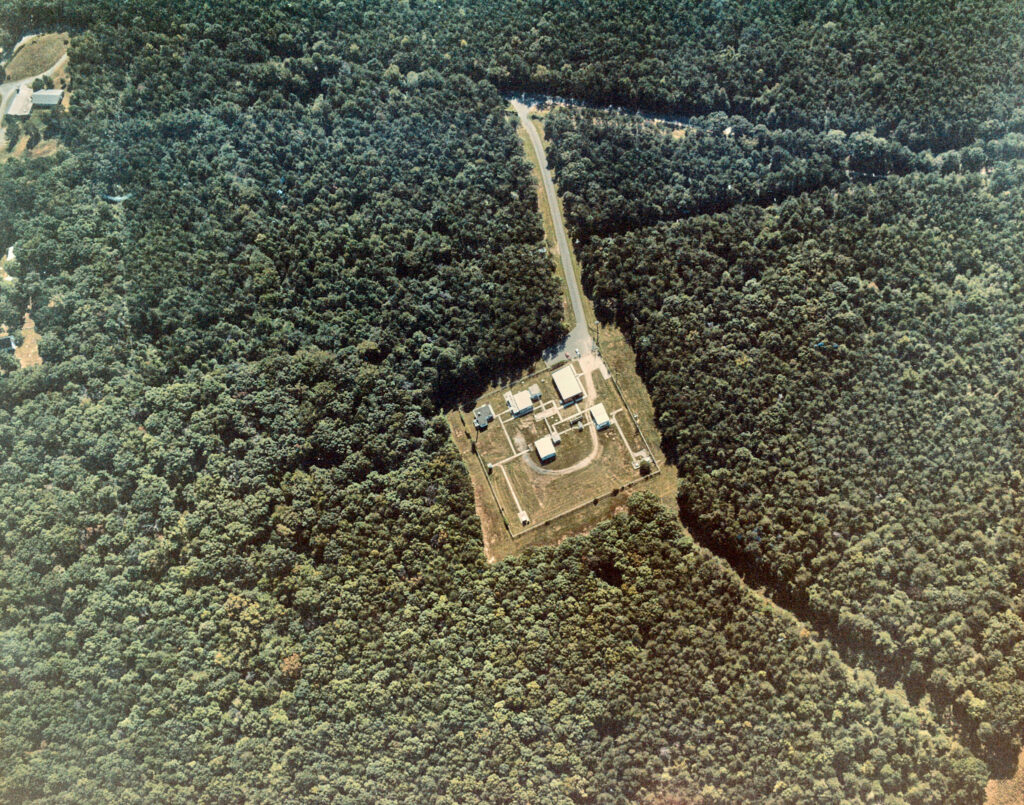
Goddard’s campus, including Area 400, is within Greenbelt’s city limits following the annexation that took place in April. Area 400 is primarily a wooded tract with a clearing of approximately 2.5 acres that until recently held 11 buildings and their infrastructure, such as plumbing. The legal transfer of the land took place in February but GSFC was still conducting close-out activities to return the area to a natural state until recently, explained Rob Garner, GSFC’s news chief.
The proposal of the transfer dates back several years and was first reported by the News Review in the January 13, 2022 issue. At that time we reported that the parties would need to agree on terms for transfer at fair market value to avoid public sale. Later, however, NASA was able to declare the area excess property and conduct the inter-agency transfer at no cost, Garner confirmed for the News Review on Tuesday.
Rich History
Area 400 “has a rich place in our nation’s space program,” said Ray Rubilotta, associate director of GSFC. In the early days of Goddard, around 1960, Area 400 was a location for propulsion research, and the propulsion systems developed there have been essential in maneuvering space satellites, explained Rubilotta. GSFC was established May 1, 1959, as NASA’s first space flight complex. “Over time propulsion testing has evolved within NASA to other field centers, and the surrounding area around this Area 400 has grown, so that evolution brought forth the opportunity for transformation,” he said. Finding a hundred acres of underdeveloped land in this region of the state is “almost unheard of,” said Rubilotta, as he stressed the importance of the land, which a NASA media announcement dubbed ‘Hundred Acre Wood.’ The transfer affirms a commitment to environmental stewardship and responsible management of public lands, said Rubilotta.
Part of Patuxent Refuge
Area 400 is now part of the Patuxent Research Refuge, which USFWS Director Brian Nesvik noted is the largest contiguous block of forested land between Washington, D.C., and Baltimore and is now even larger. He called the transfer “really an incredible opportunity for both wildlife [and] for the local community.” Nesvik said Area 400 will now offer opportunities for birdwatching and hiking and that there will be an evaluation of the opportunity for hunting. Nesvik cited President Theodore Roosevelt saying that what will make us a great nation is not the resources and lands we have but how we choose to use them. Roosevelt viewed conservation as a national duty.
Significance of Transfer
Mayor Emmett Jordan told those gathered, “Greenbelt has always been a place where planning and purpose matter. From our beginnings as a New Deal community … to our long-standing commitment to open space …we’ve worked to grow in a way that respects both people and the environment. This land is part of that story. It is part of the original ‛green belt’ that gave our city its name — a natural buffer that has helped define Greenbelt for generations. And today, our tree canopy and protected spaces remain some of our greatest assets. Today’s transfer of Area 400 fits squarely in that tradition.” Jordan said placing the land with USFWS ensures it will be protected and stewarded for future generations.
Also speaking at the ceremony, U.S. Representative Glenn Ivey said he loved what was going on in Greenbelt and pointed to NASA and the Beltsville Agricultural Research Center, among other organizations. “And, yes, we’re going to keep the agricultural research center right there just like it is,” he told the crowd, an acknowledgement of current efforts to divest the center by the end of the fiscal year. Ivey emphasized numerous economic opportunities in the Greenbelt area and the chance to continue to grow on the science and technology front but also in conservation.
Ceremonial Agreement
Seated beneath a tent in Area 400, which was misty from recent storms and heat, GSFC Director Jamie Dunn and Nesvik signed a ceremonial agreement commemorating the transfer of Area 400 from NASA’s GSFC to the Department of the Interior’s
USFWS.
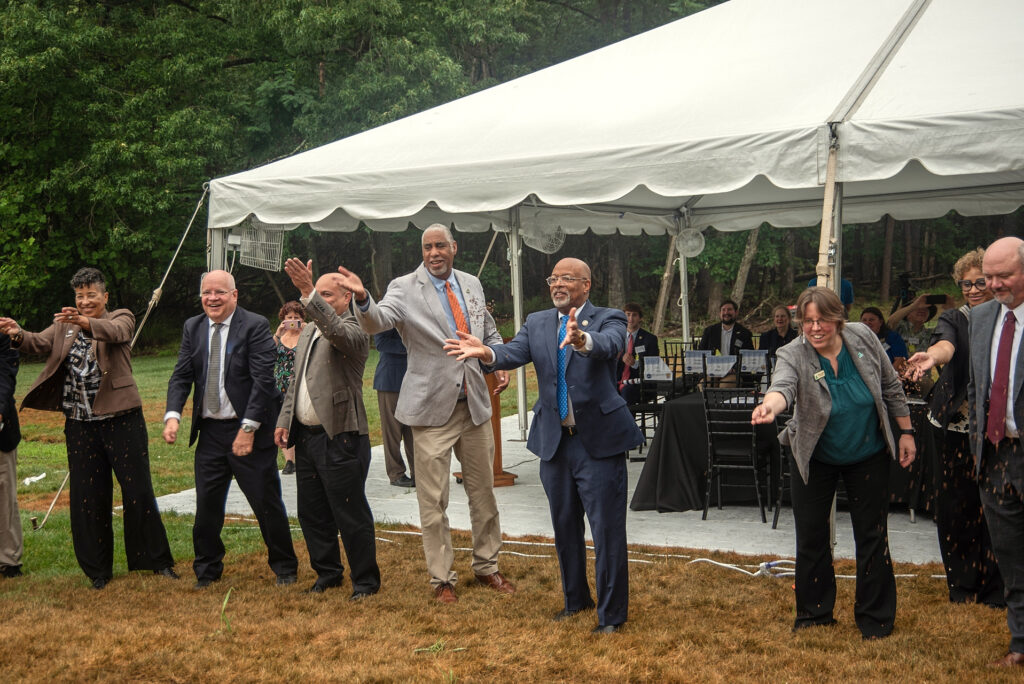
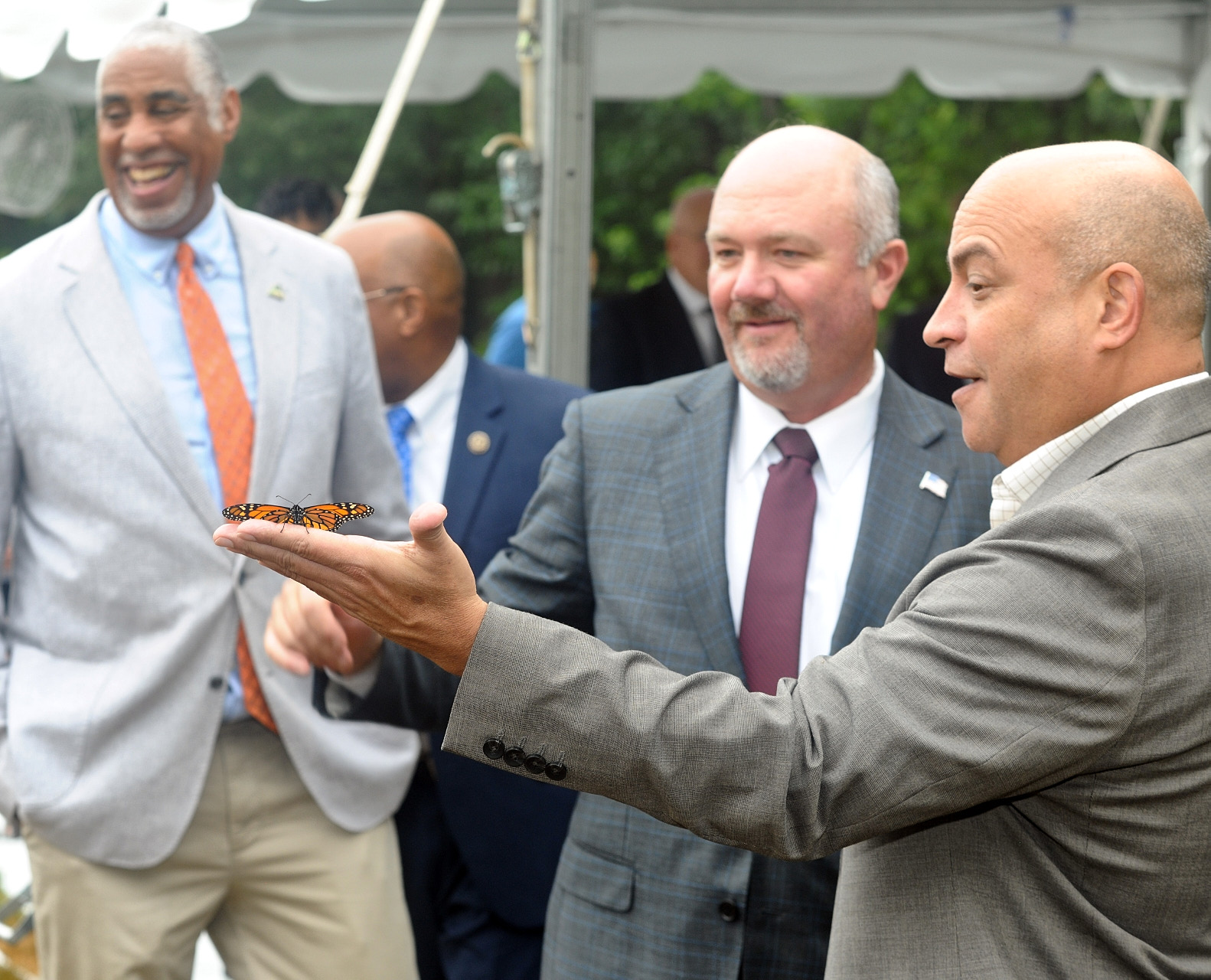
Following the signing, dignitaries and officials threw milkweed seed in the clearing, where the outline of buildings that were located there until recently could be made out through the shapes of new sod. The ceremony ended with the release of monarch butterflies, who at this time of year will make their way north.