Prince George’s County Public Schools (PGCPS) Interim Superintendent Shawn Joseph has had to cut $150 million from the budget. In fall budget discussions, he pledged to keep those cuts as far from the classroom as possible. Joseph’s budget, which was presented in January, despite requirements it be shared earlier (see the February 12 News Review) is only a proposal until a final board vote and adoption by the county. Along with his proposed budget, Joseph’s Budget Equity Plan, presented in February, aims to address variance within the district. In his 100-day message in the fall Joseph said, “Variance shows up in opportunity, access and expectations, where a child’s experience can depend too much on their school, their zip code or the adults around them.” The budget “is a strategic tool to move the district from isolated pockets of success to systemic opportunity for all,” said a February press release. Joseph’s equity presentation offers three existing pockets: magnet, immersion, and International Baccalaureate (IB) and Advancement Via Individual Determination (AVID) programs. “These programs are strong, but they do not serve most students,” states the slide entitled “What We Built.” The News Review interviewed Joseph to ask about his vision for moving the county’s schools “from pockets of excellence to excellence at scale” and what that means for specialty programs.
Budget Cuts
Program cuts in the proposed budget for next school year already include eliminating boundary, middle and high school language immersion (though not language immersion programs at K-8 lottery schools), cutting IB programs at the elementary and middle school levels (though continuing the high school program) and discontinuing AVID courses (for college and career readiness in grades 6-12). The rationale for these cuts is under-enrollment and disproportionate costs that serve few students, says Joseph (see the February 5 issue).
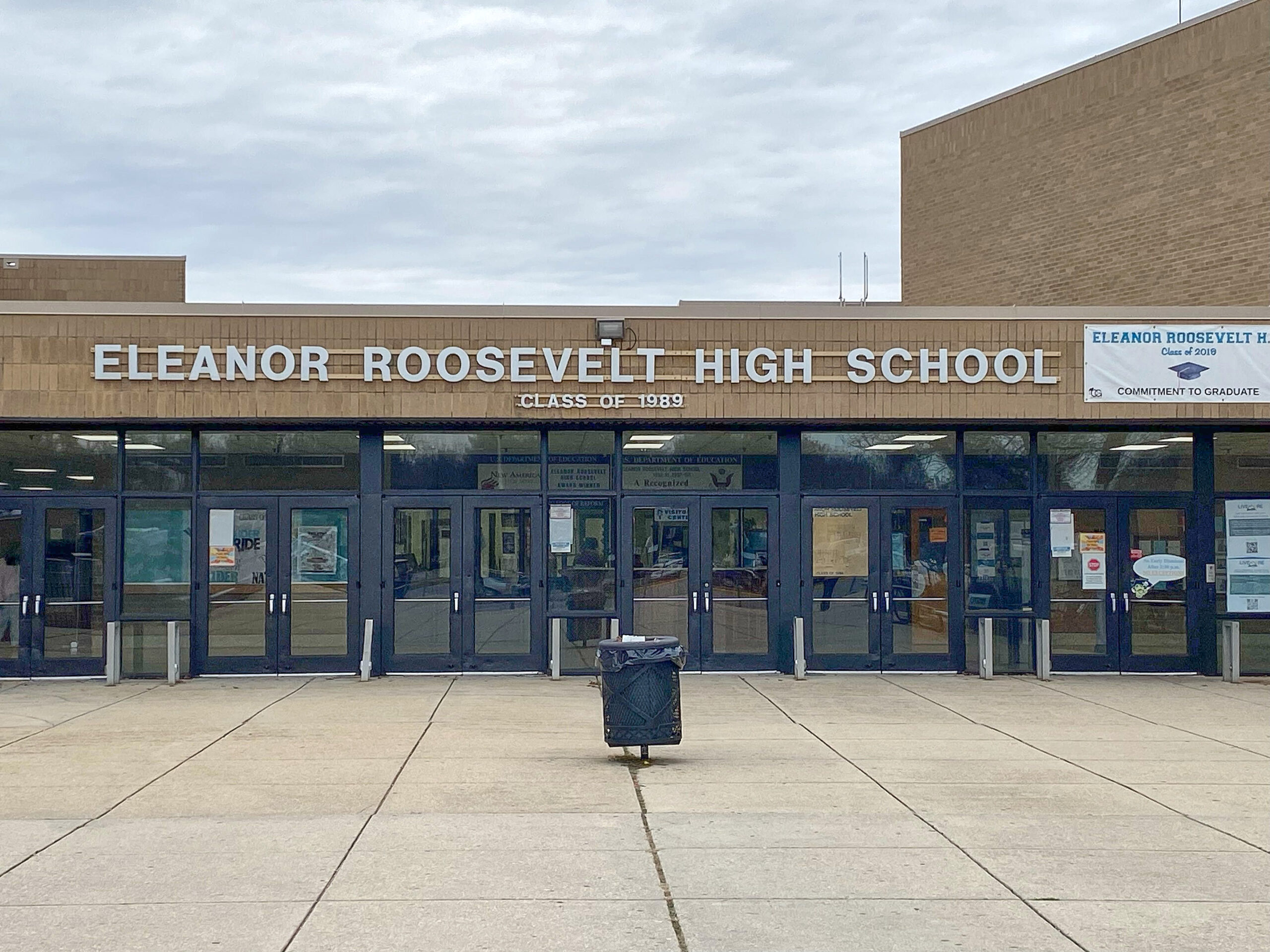
However, the budget also cuts funding for staffing at magnet programs, an assistant principal and professional school counselor for the science and technology (S&T) magnet programs at Eleanor Roosevelt, Charles Herbert Flowers and Oxon Hill high schools and an assistant principal and counselor for the aerospace magnet program at DuVal High (see the February 19 issue). Entrance to those programs is competitive and capped by the district.
Families are currently selecting programs for their children to enter this fall; some are accepting seats for specialty programs or watching waitlist numbers with anticipation.
“Families should feel confident that [they] are accepted into our specialty programs, including our science and technology program, that they will continue to operate and remain a part of Prince George’s County Public Schools offerings,” said Joseph. “As all districts facing significant fiscal pressure [we] will continue to monitor enrollment, monitor outcomes and sustainability to ensure programs remain strong and equitable,” he told the News Review.
Asked if he felt confident those programs can continue at the caliber that they have been despite the reductions outlined in the budget snapshot, Joseph said, “Absolutely.”
ERHS S&T
We also asked Eleanor Roosevelt High School (ERHS) Principal Portia Barnes about how the cuts to S&T staffing will impact the program there. “Science and Technology students will receive the same support from their grade level team,” said Barnes. “Each team has an administrator and two professional school counselors, [so] while the cut has an impact, it does not impact in a manner that prevents the Science and Technology students from receiving the direct support from those positions,” Barnes told the News Review. “While it is certainly impactful, the ERHS Science and Technology program has a very strong academic and organizational structure; I feel very confident we will be able to pivot and it will not place our program or students at a deficit,” Barnes said. “While we are losing the positions, the program is designed with a Science and Technology Coordinator who is supported by our STEM staff and the entire administration and guidance teams,” she explained. This summer, under the proposed budget, S&T programs will also lose the summer bridge program that has traditionally oriented incoming S&T students and helped prepare them for the program. “Summer Bridge is an opportunity for our incoming Science and Technology students to get acclimated to the program expectations and be exposed to lessons, activities and team building. It requires funds for staffing and resources. If we do not have the funds we cannot offer it; however, the ERHS Science and Technology team along with the support of the PGCPS STEM office are brainstorming how to provide some form of engagement,” Barnes told the News Review.
Redeploying Resources
PGCPS has to look at the current resources they have and figure out how to “redeploy them in a way that allows us to have greater consistency in building capacity,” says Joseph. “You have to have high support and high expectations and rigorous curriculum to scale. … We’re in the process of building a new strategic plan that will be out July 1. And when that plan comes out, a big part of that plan is thinking about how we build capacity and what that looks like, particularly in reading and mathematics.”
Pockets of Excellence?
We asked Joseph if he sees what he has called “pockets of excellence” and “islands of excellence,” as programmatic rather than geographic and if he sees a way to expand successful programs, to admit more students to science and tech models, for example, and how he sees specialty programs and magnet programs fitting into a system that’s moving away from “pockets of excellence.”
“I think it’s important for me to say, I was the principal of one of the highest performing magnet programs in Maryland,” replied Joseph, who was principal of Roberto Clemente Middle School in Montgomery County, which he explained had both a mathematics magnet and a humanities and media magnet program. “I was the Maryland State Principal of the Year in 2009 for the approach we took to not only look at the resources that those schools within the schools carry, but how we leveraged their presence to raise the level of quality expectation … across the entire school there back from those days in 2005 to 2009. So, I believe in magnet education,” he says. “I’m very versed with what it takes to really not only run one, but to make sure students are going off and living out their wildest dream. But I believe that we must focus on ensuring all kids in every neighborhood have high quality options. I think we have to use the limited resources that we have to ensure just that.”
Prince George’s County’s magnet schools and specialty programs have origins in attempts at desegregation and equity themselves. They give children opportunities to study at a school outside their geographical boundary, through lottery applications or seats that are offered based on grades rather than parent applications. “I think Prince George’s County’s magnet history had … more to do with working with the desegregation policies and things we went through. We’re a much different district than we were in the 1980s at this moment. And so … I think that there’s an opportunity to keep the strength of the current specialty programs that are in place, but also work to scale quality in those non-
specialty programs. And that’s really what I’m focused on.”
Scaling Quality
How do you scale quality? “I think you invest in professional development. You invest in technology that helps you focus on consistency and feedback much better. I think you make investments in resources, high quality resources so all kids have access to high quality resources. You look at the ecosystem,” he said. “We are an environment that is rich in science and technology and institutions,” said Joseph. “We can partner with them. We’ve got to be competitive to recruit and retain the best teachers.”
So, with a focus on reducing variance, does Joseph see magnet schools, immersion and IB in the future of Prince George’s County in five years and 10 years? “I do,” says Joseph.
Asked about his equity presentation that advocates a “reversal” from concentrations of excellence and “redistribution” to “excellence at scale,” Joseph says, “I wasn’t talking about taking anything away. The term [reversal] … referred to reducing systemwide variance and access and resource allocation, not abandoning the excellent specialty programs we have. And again, under fiscal pressure over time … excellence can become concentrated in specific programs. And our goal … the reversal is about interrupting the patterns of inequity by strengthening high quality opportunities more consistently across the district, not eliminating the programs that we currently have.”
“I feel good about where we landed,” says Joseph of the budget. “I feel like we can continue to grow all of our students, all of our 132,000 students in the district, and be very thoughtful and methodical.”
The PGCPS Budget Snapshot can be viewed here: https://tinyurl.com/p9vd7fmb.
The author has children who attend a PGCPS K-8 immersion program not directly impacted by the budget cuts.