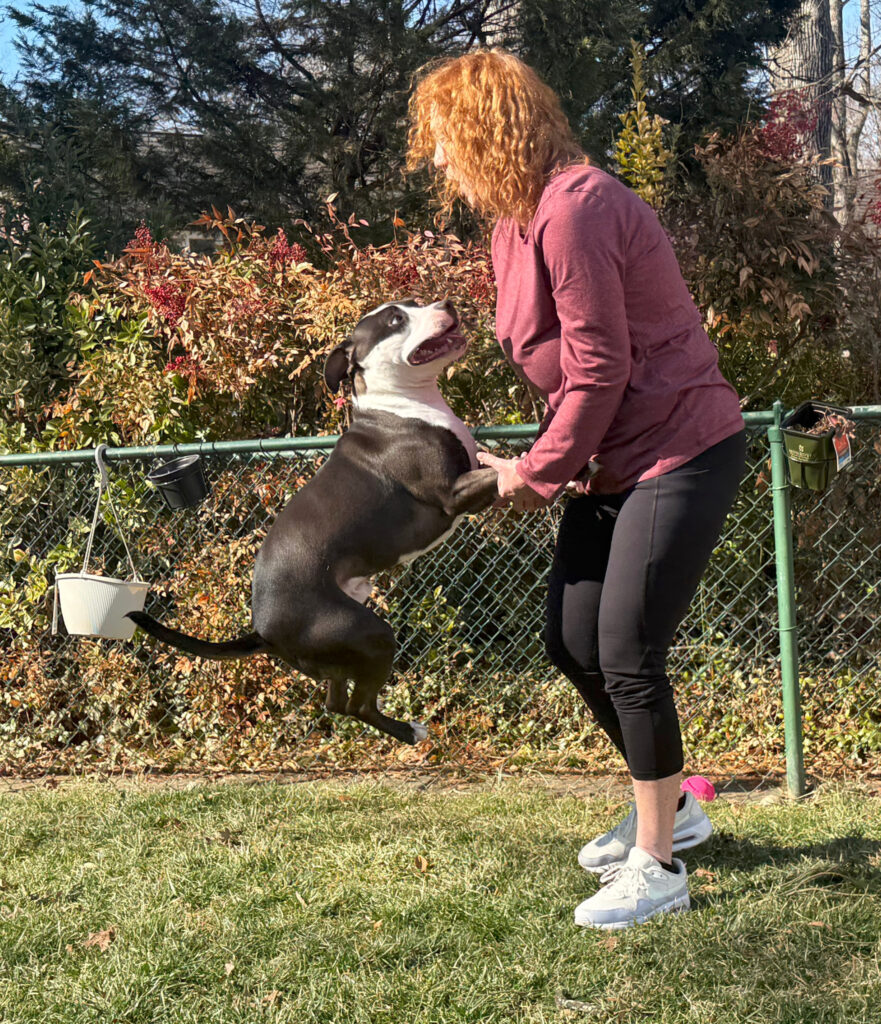
When Doreen Clower comes home and calls out “puppy love,” Milo races down from the top of the steps to greet her. Other times he climbs onto the edge of her bed, lifts his paws around her neck and rests his head on her shoulder. “That just makes me feel like he knows that I’m Mommy,” Clower said.
For the first time in nearly three decades, a dog like Milo, classified as a pit bull, can legally live in Greenbelt. Prince George’s County’s pit bull ban, in place since the late 1990s, prevented pit bulls from being adopted by county residents, including those in Greenbelt. Volunteers could walk and care for the dogs at the Greenbelt Animal Shelter, but residents could not adopt them.
That changed when the county overturned the ban in November 2025, creating a pilot program that allows local adoption with additional training and licensing requirements. “I think it’s just really amazing now that we can actually adopt out the dogs that come to our shelter in Greenbelt to actual Greenbelt residents,” said Claire Morse, a Greenbelt animal shelter volunteer.
A Stray Named Nemo
Milo, originally named Nemo, arrived at the shelter as a stray on August 5 and was adopted on December 19. About 2 years old and severely underweight, he caught Clower’s attention through photos a volunteer sent her. During their first meeting, he came straight over and sat beside her. “I truly feel that we were meant for each other,” she said.
Clower credits him with helping her heal after multiple losses in her family. “I think that we saved each other,” she said.
Shelter Impact
The Greenbelt Animal Shelter is small, with only six kennels. Volunteers say many of the dogs that pass through are pit bulls or pit-type dogs, often surrendered or found as strays. During the ban, that created a practical problem. “It’s really hard to advertise these dogs to people who live elsewhere when we’re in Greenbelt, we’re in this community and the whole population of the city isn’t even eligible to adopt these dogs,” Morse said.
Morse said dogs often struggle in kennel environments the longer they stay. Milo, she said, was initially relaxed and easygoing, but after months inside, he became anxious in his kennel. “He hated being inside,” Morse said. “He would go nuts … jump off the walls and show a lot of anxiety. And then as soon as you take him outside, he’d be totally fine.”
Volunteers continued walking and interacting with pit bulls even during the ban. “It was always just kind of funny that these were banned animals, but yet we still interacted with them in the community,” Morse said. “They just weren’t allowed to live here.”
The Safety Debate
The repeal followed debate over whether pit bulls pose greater risks than other breeds. The American Veterinary Medical Association (AVMA) opposes breed-specific legislation, stating that “any dog can bite, regardless of its breed.” According to the U.S. Centers for Disease Control and Prevention, dogs bite over 4.5 million people each year. The AVMA asserts that bite risk is influenced by a dog’s history, socialization and supervision, not breed alone.
The AVMA also argues that breed bans can divert attention from more effective approaches, such as enforcing leash laws and holding irresponsible owners accountable. It also notes that identifying a dog’s breed based on appearance alone is often unreliable, particularly for mixed-breed dogs labeled as “pit bulls.”
The new pilot program requires pit bull adopters to complete an online pet-parenting class, pass a test, register with the county, obtain an annual pit bull permit and comply with spay and neuter requirements. Animal control officers can also inspect the dog and home.
Clower completed the required training before bringing Milo home. “No matter how they’re treated or the abuse that they go through, they still come back just wanting love and giving love,” she said.
Adjusting to Home
Milo still shows signs of past trauma. He hesitates at the front door but is comfortable using the back. He sometimes cowers near certain vehicles. He barks mostly for attention, not aggression.
Clower said she refused to crate him because kennels had stressed him at the shelter. Instead, she followed the “3-3-3 rule” – three days to decompress, three weeks to settle in, three months to fully adjust – and took time off work to help him acclimate.
Within 20 minutes of arriving home, she said, he began following her everywhere. He now sleeps pressed against her and sometimes uses his paw to tap her for attention.
A New Era
For volunteers like Morse, the policy shift means more dogs can stay in the community where they were found. “We love when they get adopted in Greenbelt because we love seeing them around,” she said. “You get very attached.”
While it is too early to measure the long-term impact of the policy change, shelter volunteers say they expect shorter stays for pit-type dogs and more successful placements.
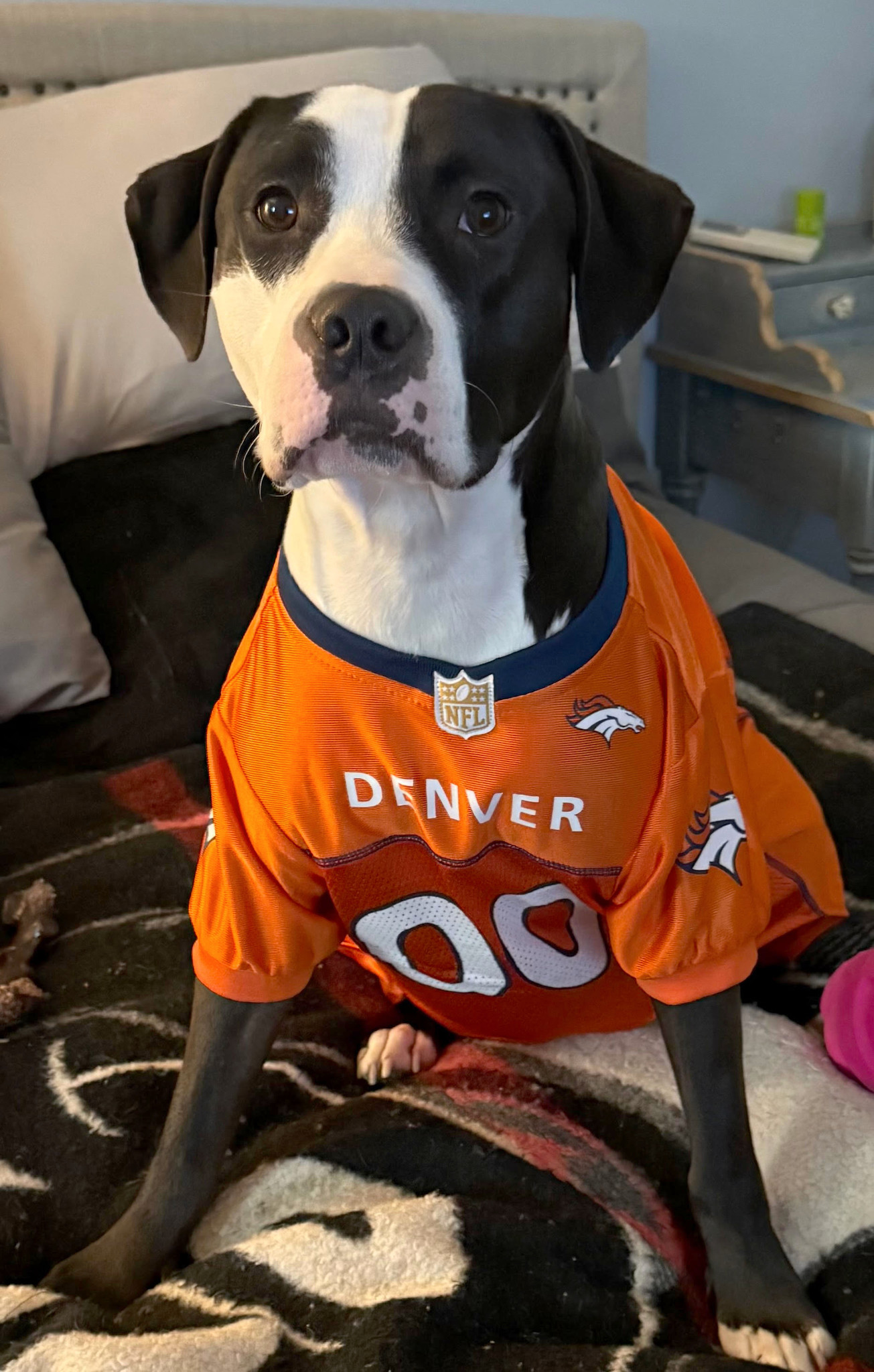
For Clower, the change is already tangible. Milo is no longer a stray named Nemo waiting in a kennel. He is a dog with jerseys for game days, a raincoat by the door and a place where he belongs.
“He’s my heart,” she said.
Stephen Lotz is a University of Maryland student at the Philip Merrill College of Journalism interning with the Greenbelt News Review.