This article covers the city waste collection budget deficit and the planned use of SAYT revenue. Part One of this report covered the need to address city waste collection budget deficits, how the SAYT pilot and WasteZero were chosen to help address the deficit, WasteZero and city revenue sharing, and other options to reduce waste collection costs and expand revenue.
A deficit in the solid waste collection account occurred in every fiscal year since 2019, except 2020, rising to a $279,635 projected deficit for Fiscal Year (FY) 2026. This month City Manager Josué Salmerón told the News Review the deficits were caused by increased costs for delivering service, including personnel, truck maintenance, repair and fuel, and landfill trash “tipping” fees. He said the city’s annual $280 fee paid by households receiving city waste collection service, unchanged since FY 2016, didn’t reflect the cost of providing that quality of service. In budget discussions in 2023, then-councilmember Judith Davis suggested increasing the waste collection fee, as did Councilmember Kristen Weaver in 2024.
Salmerón assumed his position in late 2023 and was unable to speak to events before his arrival. He told the News Review the deficit greatly increased beginning in FY 2024, after council’s 2023 decision to increase city employee compensation, which combined with 2025 and 2026 county landfill trash “tipping” fee increases, forced addressing the deficit now.
City Leadership Turnover
The News Review determined that the deficits also coincided with much turnover in the city manager and Public Works director positions and the pandemic. In January 2017, longtime city manager Mike McLaughlin retired, succeeded by Nicole Ard. Longtime assistant city manager David Moran retired in March 2021, succeeded by Timothy George. When Ard left the city manager position in December 2021, George served as Acting City Manager until Salmerón was appointed city manager in September 2023. In December 2021 longtime Public Works Director Jim Sterling retired, succeeded by Willis Shafer in June 2022, who left the position in December 2023. Assistant Director Brian Kim served as Interim Director until being appointed Director in early 2025.
Use of SAYT Revenue
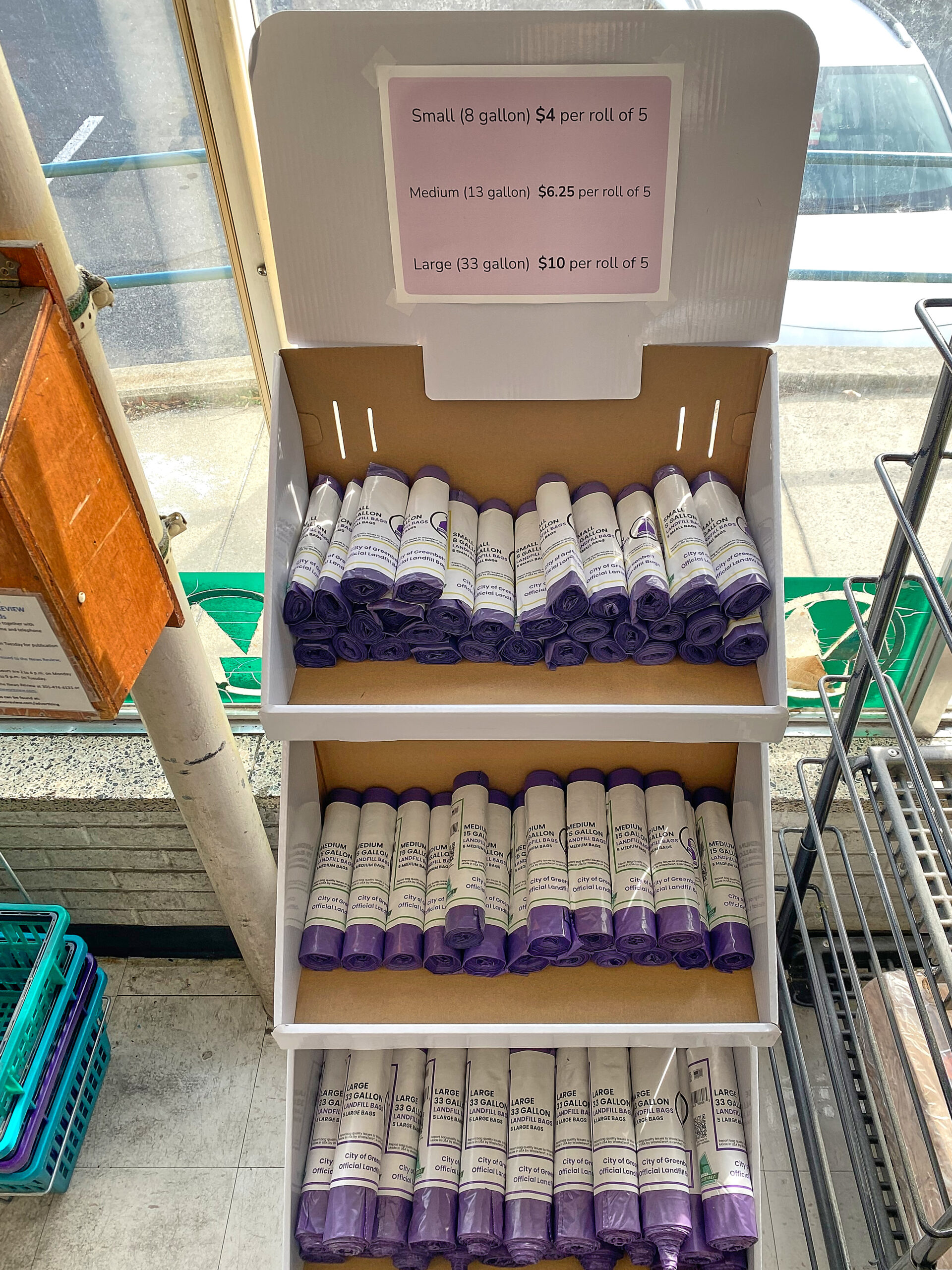
The new $240 base fee and SAYT bag and Max Trash sticker revenue will contribute to all waste collection costs, including personnel, county tipping and recycling fees, yard waste and bulk trash service, and truck operations, said Salmerón.
The SAYT bag and Max Trash sticker prices represent estimated trash tipping fees for the bag or Max Trash volume, according to messaging from city staff and council’s Greenbelt Advisory Committee on Environmental Sustainability (Green ACES). However, Salmerón told the News Review that does not mean bag and sticker revenue will fund only tipping fees. Rather that revenue will contribute to all components of the waste collection budget and reducing its deficit, because generating more trash increases not only tipping fees, but also personnel effort and costs for truck maintenance and fuel. The same personnel and equipment that collect household trash also collect household recycling and yard waste, collect trash and recycling from city parks, playgrounds and buildings, and from city events throughout the year. The revenue will also fund collecting bulk trash and appliances.
How Greenbelt Costs Compare
Several 2025 council worksessions and the August 7 SAYT town hall compared solid waste collection fees between Greenbelt and other jurisdictions: $280 for Greenbelt’s previous annual fee, $298 in Anne Arundel County, $356.32 in Prince George’s County, $503 in Rockville and $549.59 in Montgomery County. Greenbelt’s SAYT pilot will set a $240 base fee for all city-served households, plus each household’s costs for SAYT bags and/or Max Trash stickers. Salmerón told the News Review that many Greenbelt household SAYT costs, or even the approximately $400 flat fee considered for every household before choosing the SAYT pilot, would be lower than some nearby jurisdictions that provide less service than Greenbelt.
Fiscal Responsibility
Salmerón says it’s difficult to predict how well the pilot will address the deficit, given variables including how many households will select SAYT bags or Max Trash stickers, and how much waste households will avoid or divert to recycling, composting or other options. He emphasized that 2026 is a pilot. Revenue and resident feedback will be evaluated as the city determines whether to continue the program, or raise fees for all households regardless of their trash volume.
Salmerón said many homeowners appreciate the quality and low cost of Greenbelt waste collection services. He said Green ACES saw the deficit as an opportunity to explore better waste management services and allocate its cost proportionally to users. As city manager, Salmerón said he must address a service whose cost is unsustainable by current rates and is being subsidized by the general fund and city taxpayers who don’t receive the service. His role and responsibility is to deliver the services residents and council want while ensuring user fees reflect the true cost of those services, he said.
Monitor greenbeltmd.gov/SAYT for program updates.