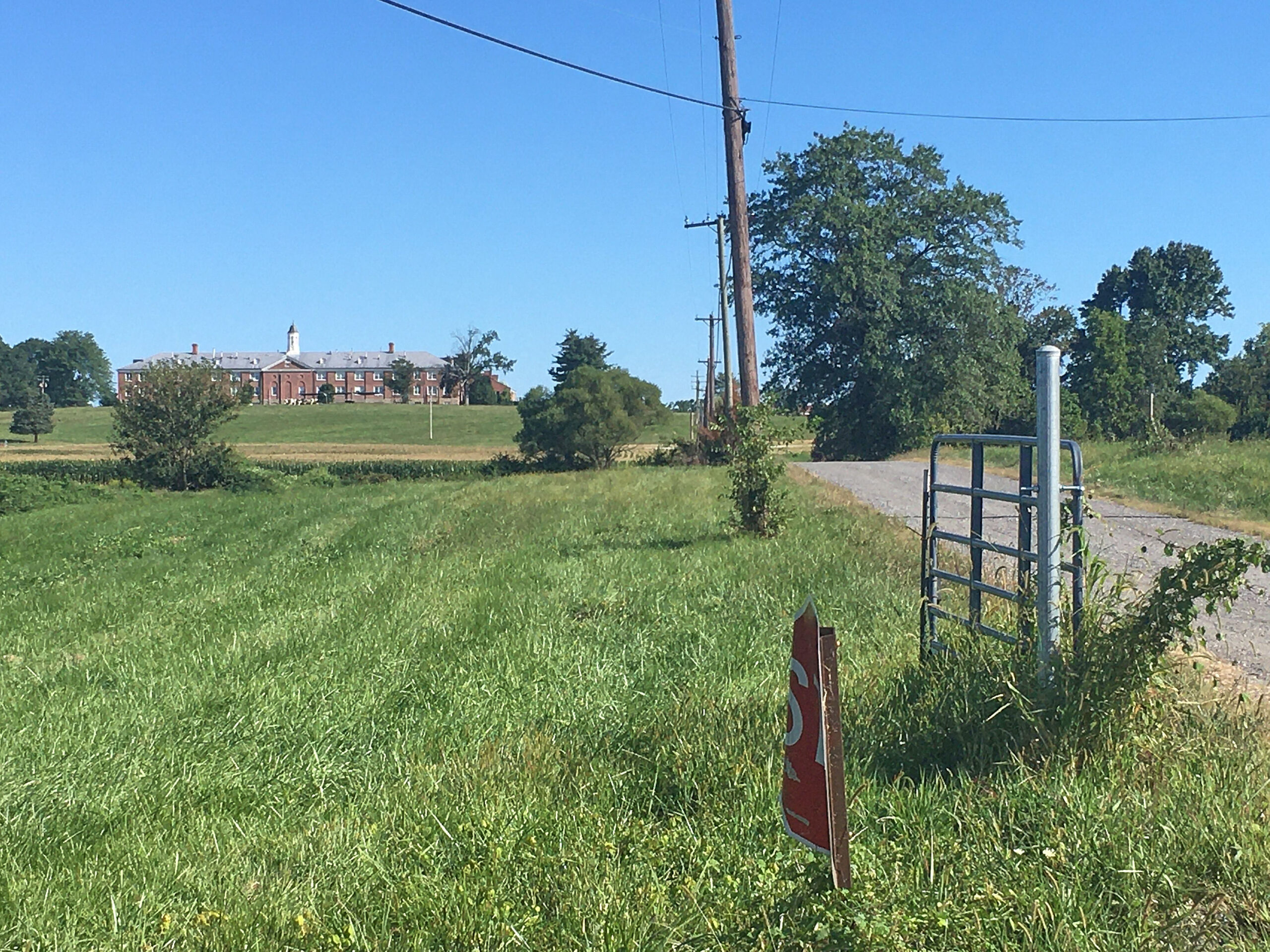
On April 23 the U.S. Department of Agriculture (USDA) announced it would begin “decommissioning” the Beltsville Agricultural Research Center (BARC), relocating research programs to facilities across the country. The plan was announced last summer (see the July 24, 2025 issue). Yet in July 2025 Secretary of Agriculture Brooke Rollins said BARC would be “vacated over multiple years to avoid disruption of critical USDA research activities.” In the fall, Congress allocated $6 million in the Agriculture Appropriation Act, included in the 2026 budget, for renovation and construction at BARC (see the December 11 issue), which bolstered hope by supporters that no move was imminent.
In April 2026, Rollins announced, “This move puts our research institutions outside of the beltway and closer to the land grant universities with talent pipelines who will lead the research and solve the problems facing the future of American agriculture. This is about strengthening our USDA research focus and improving the services the agricultural economy relies on.” BARC is positioned directly adjacent to the University of Maryland College Park, a public land-grant research university.
At the end of April some BARC employees received preliminary notifications of relocation. The form letters informed them their position is identified for relocation out of the National Capital Region (NCR). They would receive a Management Directed Reassignment (MDR) letter containing their relocation destination, pay based on new locality, timeline to accept or reject the reassignment, report date, relocation benefits and options if they decline, said the preliminary letters, one of which was reviewed by the Greenbelt News Review.
A BARC employee who spoke with the News Review said people there are still waiting for their reassignment letters but they’ve been told to expect them very soon and to be ready to move by the end of the fiscal year, which is September 30. Multiple sources report that the plan is now to vacate BARC by that date, one saying that was communicated at an all-hands meeting by Acting Area Director Joe Rich. One employee told the News Review that Rich is creating a nationwide panel to decide where the Beltsville labs should be moved to and hopes to determine that this month. Two current employees who spoke to the News Review said they believed the new timeline was politically motivated, with the aim to accomplish the move before midterm elections.
Impact on Employees
“Everyone is so deflated,” said one longtime BARC employee who spoke with us. This is especially true for those in research and “in charge of getting papers out.” They’ve not been allowed to cooperate with anyone or communicate with the scientific world about what is going on, he told the News Review. Now no one is coming to their defense, saying, “‘Hey, we need our colleagues in Beltsville,’” he said.
“We are in a weird limbo waiting for that MDR letter,” another employee told the News Review. “Some research is moving ahead where other research is stalled. Motivation is hard to come by. Many staff know they would not want to move and have begun searching for a new job. Others are exploring retirement options.”
BARC has already lost a lot of staff over the last 18 months. There’ve been retirements and resignations and a lot of good people took “the forks,” said one BARC worker, referring to the controversial deferred resignation option offered federal workers, which was a major initiative by the Department of Government Efficiency that was created under President Donald Trump.
AFGE Local 3403, the union representing BARC workers, reports that 76 percent of its members have indicated they are not planning to relocate, as reported by Federal News Network.
One of the employees we spoke to said whether or not he’d move with his lab when it’s relocated depends on where that move is to.
In the USDA Organizational Restructuring Plan announced on April 23, the potential sites slated for BARC research projects to be relocated to are: Fayetteville, Ark.; Albany, Calif.; Ft. Collins, Colo.; Ft. Pierce, Fla.; Miami, Fla.; Athens, Ga.; Tifton, Ga.; Ames, Iowa; Aberdeen, Idaho; West Lafayette, Ind.; St. Paul, Minn; Columbia, Mo.; Starkville, Miss.; Stoneville, Miss.; Raleigh, N.C.; Fargo, N.D.; Grand Forks, N.D.; Clay Center, Neb.; Chatsworth, N.J.; University Park, Pa.; Wyndmoor, Pa.; Charleston, S.C.; Kerrville, Texas; Logan, Utah; Wenatchee, Wash.; Madison, Wis.; and Kearneysville, W.Va.
Impact on Research
The September 30 timeline has significant implications for research projects at BARC as well as their personnel. A longtime employee we spoke with shared the difficulties for groups that work with perennial plants, who, for example, need to plant this summer the plants they will examine next year. “The breeding programs are time sensitive,” he said. Work at BARC includes germplasm research studying pathogens with implications for crops and food security, and a post-harvest group that tests chemicals on fruit for safety, preservation and presentation. There have been some collaborations with NASA to grow food for that agency’s space missions’ needs, too, the employee told the News Review.
That Greenbelt employee also expressed concern about the difficulties in transporting the contents of labs to other locations, saying a permit is needed to transport plants, plant products, plant pests and soil from state to state. Requirements vary by state and the planned destinations for each lab are yet unknown. “We have plants with viruses,” noted our source.
There’s also genetic material that needs to be stored at super cold temperatures, said the BARC employee. While standard freezers in homes keep food between –5 and 5 degrees, some BARC scientists are working with material they need to keep in “the minus-80s.” Some samples are decades old and he’s unsure what will be kept or needed. They’ve been informed there will be specialized trucks suitable to transport the minus-80s materials anywhere in the country.
Funded Renovations
BARC consists of approximately 6,500 acres and more than 400 buildings. In May, USDA Deputy Secretary Stephen Vader called BARC an “ancient, underfunded, decrepit facility.” Meanwhile, Maryland delegation members, including U.S. Senator Chris Van Hollen, have argued that “since 2016, USDA has invested at least $174 million in BARC facility upgrades and repairs.”
This fiscal year appropriations were allocated to support BARC, including renovations. Yet, one BARC employee from Greenbelt told us much of the remodeling work and repairs have now ground to a halt. This includes necessary steam line work, he said, which is leaving lines leaking and corroded. He said, though it is unconfirmed, some believe contractors have stopped working on approved projects in some cases because they aren’t getting paid. “The funding is there,” our source alleges, “but getting access to the funding is a completely different story.” That money is not coming down to the projects now, he says. “Everyone knows there’s money, but somehow they have it all tied up,” he says of the congressionally appropriated funds contained in the 2026 budget package.
Conversely, another BARC employee told us “there is significant maintenance work still being done, albeit slowly.”
As previously reported, the Agriculture appropriations stipulated support for the continued operation of BARC and included $6 million in funding to spend on construction and facilities improvements and building and infrastructure updates.
Waiting for Congress?
“No one is sticking up for their rights,” said a Greenbelt BARC employee we spoke with. “No one is waiting for the congressional legislation and to make sure that this is what the American people want.” The lack of upset over the process, the lack of checks and balances, and bypassing Congress is what upsets him most. American citizens should be upset, he said. “Rich people are trying to bypass the government. They’re not doing America any favors.” He believes the current administration and Republican majority are trying to close as many government programs as possible and don’t care which ones. He believes the media is failing to report all the rule-breaking and bypassing of laws established by Congress and also inflaming divisions. He has been asked by a Republican relative why he doesn’t quit, since nobody wants him. “Somehow we got vilified,” he says of federal workers.
He’d like to continue working for a few more years. His “best hope” is that BARC’s decommissioning can be dragged out long enough that “we’ll still be here when the dust settles and a new administration begins.”
However, “It’s easy to see why people are just leaving,” he says.