Prince George’s County Public Schools (PGCPS) will hold classes on March 20, Eid al-Fitr, and May 27, Eid al-Adha, converting the Muslim holidays into instructional make-up days after winter weather closures, citing state requirements to meet mandated requirements for 180 school days and instructional hours.
The decision, discussed at a recent Board of Education meeting, has drawn criticism from Muslim families and community leaders who say the move reverses progress made toward religious inclusion.
Eid al-Fitr marks the end of Ramadan, the Islamic month of fasting. Families hold a special morning prayer at the mosque in their best attire and spend the day visiting relatives and friends. Celebrations usually last three days.
Eid al-Adha is the Feast of Sacrifice, which follows the completion of the annual Hajj pilgrimage. This day falls on the 10th day in the final month of the Islamic lunar calendar.
Legal, Operational Constraints
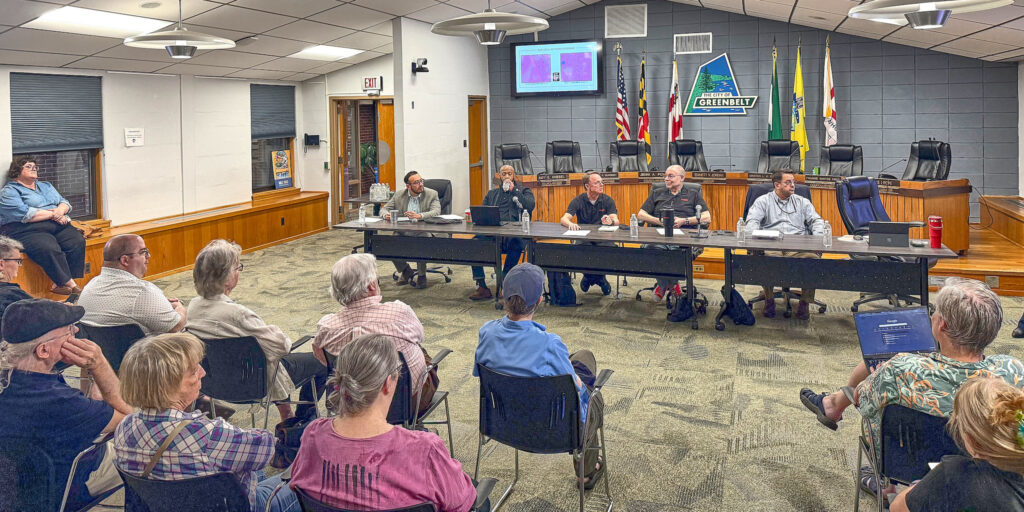
During the PGCPS Board of Education’s Special/Emergency Board meeting held February 4, district leaders described the calendar as a give-and-take.
Andrew Zuckerman, PGCPS chief information and technology officer, told board members that Maryland law requires districts to meet both a 180-day minimum and an hourly instructional requirement.
“We are required to go 180 days and we have to fulfill an hours requirement,” Zuckerman said. “We couldn’t go to school for 179 days and then add hours or minutes to the school day to then get that full day back.”
Thus, Maryland districts cannot extend the school day to compensate for weather-related closures, unlike Virginia and Anne Arundel County, which operate under an hours-only requirement.
C. Douglas Hollis Jr., business continuity officer for PGCPS, acknowledged the tension between honoring traditions and maintaining flexibility for inclement weather, brought up by Tiffini Andorful, District 1 school board member and Aimee Olivo, District 4 school board member.
“We’ve done some searches of past years where we’ve had school on some of those days. Particularly those that may be religious in nature or religious observance … and it has not had the impact in terms of operational impact from our teachers and students in attendance,” said Hollis Jr. “We do the best we can, and we are sensitive to it. We want to respect the beliefs of all our community members.”
The school year calendar includes a limited number of make-up days. Reducing them, officials said, could create uncertainty for families later in the year if additional closures occur.
Eric C. Olson, Prince George’s County Councilmember representing District 3, expressed his opposition and concern to Interim Superintendent Shawn Joseph and Board of Education Chair Branndon Jackson. This decision goes against the school system’s values and implies a religious hierarchy, stated Olson.
Meanwhile Montgomery County Public Schools have revoked their decision to use Eid al-Fitr as an inclement weather make-up day.
Muslim Council Reacts
Community leaders say PGCPS’ decision marks the first time since the holiday was added to the calendar that Eid al-Fitr has been used as a make-up day.
Jameel Aalim-Johnson, president of the Prince George’s County Muslim Council, said the community is disturbed by this decision. Local members are taking action by emailing board members.
“It was Prince George’s County Muslim Council that worked with the members of the Board of Education and the former CEO to get Eid as a day off, both for students and faculty and administrators,” said Aalim-Johnson. “So this is the first time that we’re dealing with them using our holidays as a make-up day for inclement weather.”
“We find this to be somewhat discriminatory,” Aalim-Johnson said. “When this decision was made, they skipped over Presidents’ Day. They went to the Eid holiday. They then skip over Good Friday and Easter Monday, spring break days. So, it’s as if they’re saying, leave all the other days alone, but target the Muslim holidays.”
Parents Forced to Choose
Jessica Carroll, a College Park parent whose son attends Dora Kennedy French Immersion School in Greenbelt, said the change forces families into a difficult position. “I mean, for me personally, I feel a bit frustrated,” Carroll said. “It feels like he’s not getting the same opportunity to celebrate his holiday in the way that other religions are more protected in the calendar.”
Similar to Christmas or Easter, families may attend religious services and then rejoice with friends and other family members over dinner, bringing gifts for the young ones and cherishing memories. “It’s a day of celebration. It’s a day of visiting family and friends, and really, just like being with your family and celebrating that you’ve kind of completed this whole month of fasting,” Carroll said.
She described the board discussion as dismissive. And after weighing her options, Carroll is leaning toward not sending her son to school. Her son’s cultural identity and upbringing are important to him, and she does not want to deny them. “It was disappointing to listen to the board meeting … and have it be reduced to whether it was … operationally significant for the district or not,” Carroll said. “It felt very insensitive.”
Recognition a Milestone
Zayd Mahfuz, a graduate of Eleanor Roosevelt High School in Greenbelt and current president of the Muslim Students’ Association at the University of Maryland, recalled how meaningful the 2021 calendar change was. “Everyone around me was so happy,” Mahfuz said. “It was a really big step forward for inclusivity and for the large and growing Muslim population.” He said the reversal feels discouraging.
“It feels like a step backward instead of taking other measures first,” Mahfuz said. “That one holiday that we got during the school year for Muslims was such a big … step for us, like we felt that we were being included.”
Before the holiday was added to the calendar, students often missed school for Eid and returned with excused absence notes, sometimes missing tests or new instruction. “My older brother … had to miss the Eid prayer and go to school,” Mahfuz said of one year when a test conflicted with the holiday.
Advocates in Prince George’s County say they hope district leaders reconsider in future calendar revisions. For many families, they say, the issue extends beyond a single day.
“People understanding the existence of members of the Muslim community in this larger community who are affected by policy,” Aalim-Johnson said, is at the heart of the concern.
As March 20 approaches, some families plan to keep their children home. Others hope the controversy will lead to clearer policies and stronger protections for religious observances in future school years.
Laura Charleston is a University of Maryland student at the Philip Merrill College of Journalism interning with the Greenbelt News Review.