The Greenbelt City Council’s Standing Rules are adopted by a simple majority vote and govern council operations. At its regular meeting on February 9, council reviewed proposed changes to its Standing Rules. Possible changes were first identified and discussed at council’s December 10 retreat and January 7 worksession. Councilmembers Kristen Weaver and Jenni Pompi then refined them and later added a few more that had been proposed by individual councilmembers. The result was a set of 21 proposed changes for consideration on February 9. Council’s objective was to develop a list of new and revised Standing Rules that would undergo first and second readings and final adoption at one or more subsequent meetings.
Many Changes
Introducing the Standing Rules discussion, Mayor Emmett Jordan said, “For a body like the council … modifications from year to year tend to be incremental, (but) the proposals this year are quite a bit more substantial than we’ve seen in my time on council.”
In response, Weaver stated, “Maybe there haven’t been changes in the Standing Rules, but the council is substantially different than it has been in prior years. There are a lot of new voices here with a lot of new ideas.”
Seventeen of the 21 proposed Standing Rules deal with minor adjustments to routine procedures, formalization of procedures already in practice, scheduling and other matters regarding worksessions, management of council committees and working groups, and councilmember behavior in meetings and outside of meetings. Council voted to include 15 of these proposed rules in the package for later readings and adoption and tabled two for more clarification and discussion.
Public Participation
The other four proposed Standing Rules, if eventually finalized and adopted, would have an impact on public participation at council meetings. They are:
Limit regular council meetings to two hours, with council-approved half-hour extensions if needed;
Residents are limited to speaking only once on a given subject and for a maximum of three minutes at each meeting;
Use standardized resident sign-in sheets and comment cards at council meetings; and
Eliminate recitation of the Pledge of Allegiance at the beginning of council meetings.
Council voted to include the first two listed above into the final package of proposed Standing Rules for later first and second readings and adoption. It “tabled” – delaying action on – the third, and no action was taken on the fourth.
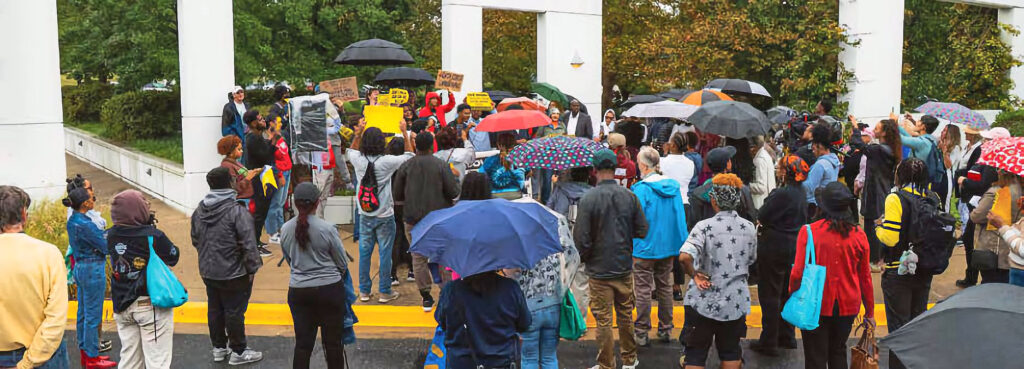
Both the potential impact of these four proposed rules on public participation and council’s process for reviewing and acting on all 21 proposed rules provoked several rounds of public opposition and council reaction at the meeting.
At several points during the presentation and discussion, Weaver, Pompi and Jordan stressed that the February 9 decisions on all the recommended changes were not final but were only on whether to include them for formal readings and adoption at a later meeting.
Public Comments Held
After council had voted to approve the two-hour limit on regular meetings and was considering a rule related to worksessions, resident Bill Orleans asked to speak. He claimed to have raised his hand during the earlier discussion of the two-hour limit on regular meetings but had not been recognized at the time. He then proceeded to express his opposition to that already approved-for-inclusion rule. The mayor declared him out of order, but he continued to speak. In a confused chorus of voices from the resident and councilmembers, council voted to “call the question,” stopping discussion on the rule about worksessions and immediately voting on it. However, Orleans persisted in speaking and would not sit down.
While the mayor was trying to hold a vote on the rule about worksessions, Councilmember Frankie Fritz suggested that allowing public comments during consideration of every one of the 21 possible changes would be difficult and he moved to allow comments from the public only after council has considered (and voted on) all the recommended standing rules. Orleans reluctantly accepted Fritz’s proposal and returned to his seat.
At this point, resident and former mayor J Davis, stated, “I was here only for a few parts of the Standing Rules and to have to wait until the very, very end so that I could speak – and you have already made up your minds – is ridiculous … So, I agree with Mr. Orleans/my fellow resident on this … Most of these changes are good ones … but some are radical, radical changes … When you’re going to take a vote, that’s when people want to have some comments. I certainly had some. Perhaps, council, you need to ask the question, do you really want public participation?”
Despite Davis’ and Orleans’ admonitions, council voted to approve Fritz’s motion to restrict public comments until the end.
Jordan returned to the rule about scheduling worksessions and council voted to accept it.
After council had voted on three more proposed rules and council was on the seventh rule on its list, Councilmember
Danielle McKinney raised again the issue of public participation. She asked if, at the end, after council has voted on including all the proposed changes in the package, “is there a way we can go through and review all the changes we have in the document, presenting what we have put through, so that we’re clear about what we’re voting on and then allow the public to respond to everything that is in here at the end? … I do think there is merit in allowing the public to comment on all (i.e., every one) of the changes before we actually take a final vote.”
Councilmember Silke Pope stated that if council listens to public comments only at the end, it could but probably would not make changes. Fritz noted that, given the trouble that had erupted during the earlier discussion on one of the proposed rules, his motion to hold off public comments until the end – which was accepted – was a way to order the debate so that people could have a chance to comment but also “so that we can get through this in a timely manner.”
Finally, Weaver offered a compromise. She moved that council discuss four proposed rules at a time, then allow public comment on only those four, take rapid-fire votes on each with amendments, if any, and then proceed to address the next four. Fritz seconded Weaver’s motion. The motion passed, and council resumed its discussion of the seventh rule on its list and addressed all the remaining proposed standing rules in batches of four until they were finished with all 21.
Resident Opposition
When it was time for public comments on a batch of four rules that included two regarding public participation – (a) the one allowing a person to comment only once on a given subject and allowing only three minutes per comment and (b) using sign-in sheets and comment cards at council meetings – several residents expressed strong opposition to the two proposed rules.
Davis said, “What I’ve always appreciated in Greenbelt is that the public was always listened to and given respect and other towns didn’t … I think most people in Greenbelt would agree that what you’re trying to do is to restrict public participation. As far as meetings go, what happens if you’re coming in on Zoom? You can’t sign in. Is it going to be a sign-in sheet ahead of time … and what if you have a question in the middle of a discussion?
“I appreciate that you’re trying to make meetings efficient, brief, and maybe that’s for convenience of the councilmembers … but not at the expense of we the people!
“Do you really want public participation? You say you do, but are you really encouraging that?”
Resident Michael Hartman, who was barely audible on the videotape of the meeting, appeared to agree with Davis. He also had problems with the proposed sign-in sheet process and expressed concern about limiting the time people can speak.
Via Zoom resident Bob Rudd stated, “I’m aghast at the attempt to minimize the democratic process, inhibiting the public for the convenience or methodology or whatever of council. You’re elected to do your job; you’re elected to attend meetings. You knew … what public input historically means in Greenbelt.”
Council voted to accept the proposed rule allowing people to comment only once on a subject and to limit comments to no more than three minutes. It tabled the proposed rule on sign-in sheets and comment cards.
There was no motion to accept, reject or table the proposed rule on the Pledge of Allegiance (see separate story on page 7 of the February 19, 2026 issue), and council moved on to finish work on the remaining few proposed rules.