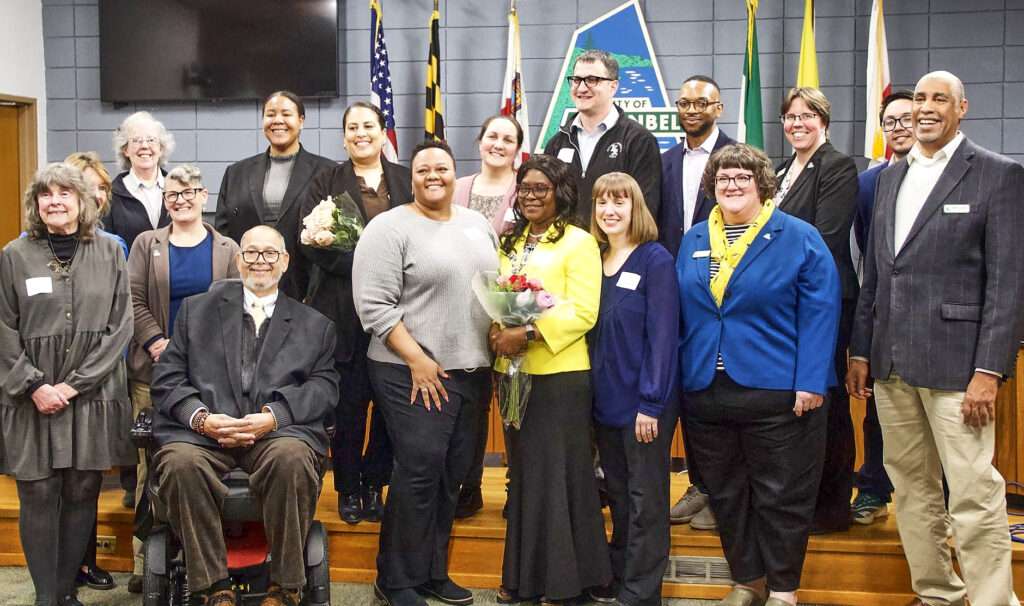
The Greenbelt City Council held a February 4 worksession to discuss and seek council prioritization of unfunded capital projects, including funding vehicle replacements for the Police Department, in order to direct staff in preparation for the annual budget process. All councilmembers except Danielle McKinney, who was traveling, attended. The discussion of approximately $65M in unfunded projects centered on, as Mayor Emmett Jordan said, “making tough decisions.”
To further guide the discussion, Councilmember Kristen Weaver asked about the status of the results of the community survey, which was presented for public input in November at the time of the citywide election. Assistant City Manager Timothy George responded that the data from the surveys was sent to the University of Maryland for analysis and he expected partial results in May and a final analysis in June.
City Manager Josué Salmerón provided a spreadsheet overview of the projects, with an emphasis on projects tied to external grants or other funding or with external partners necessary to the project’s completion. These factors affect the ranking given to those projects in order to prevent possible loss of funding. Projects were rated by priority: high (imminent need, necessary in 1 to 3 years), medium (4 to 7 years) and low (over 8 years.) The ranking of a project was made by considering the cost of the project and its priority.
Salmerón noted that of the $65M total for unfunded projects, $8.7M is estimated for the 18 high priority projects, $50M for the 23 listed as medium priority and $6M for a single project listed as low priority.
Armory
The first project discussed was the armory. Salmerón noted, and resident Bill Orleans emphatically reiterated in his comments, that staff is waiting for council’s direction on how it wishes to proceed with the armory site, as the longer it sits vacant, the higher the cost for its final disposition will be. Remediating the building, not including fitting it to its final purpose, a medium priority, is listed as costing about $10M, and demolishing it is estimated to cost $1M. Salmerón recommended demolishing the structure, a high priority, as its rehabilitation costs will be “prohibitive.”
Greenbelt Station Trail
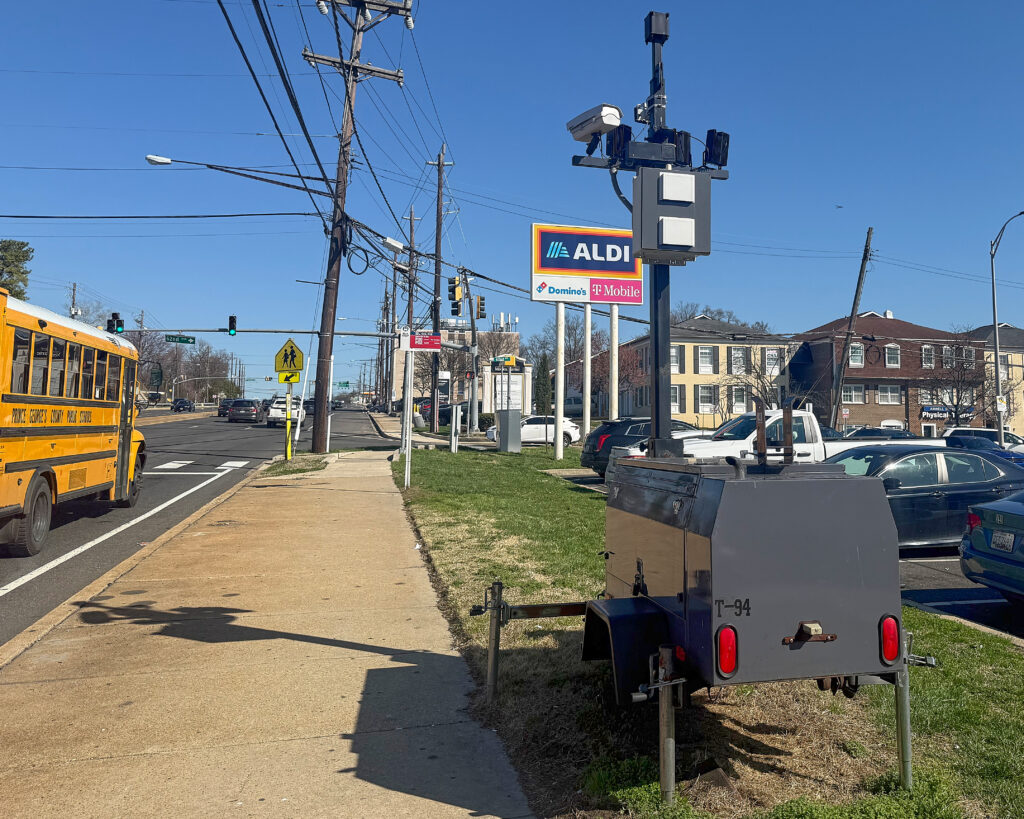
The next two items on the list are rated high, Salmerón explained, because of the potential loss of grant money: the Greenbelt Station Trail and the upgrades to the Greenbelt Museum. The Greenbelt Station Trail is estimated to cost $4M, with $1M in grants identified. About $2M of the total amount is required for technology work required by Washington Metropolitan Area Transit Authority (WMATA), such as cameras on the trail.
Museum Project
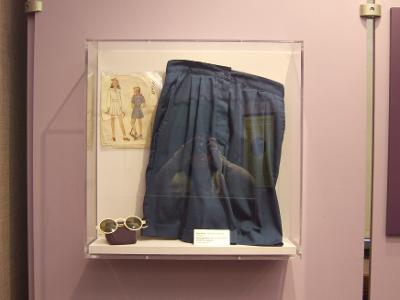
Grants have been obtained for the upgrades to the Greenbelt Museum, in the amount of $300,000, with the total amount for the project estimated at $660K. The two Maryland Historic Trust grants already awarded are at risk of being lost, Salmerón noted. He expressed the desire to hire a project manager to begin work on the 10-B Crecent Road house addition with the available funds.
Museum Director Megan Searing Young joined the meeting via Zoom. She announced that the project has been approved by Greenbelt Homes, Inc. and Public Works. Young explained that the two Maryland Historic Trust grants total $150K and the Museum has obtained another grant for $50K. In response to a question from Jordan, she explained that the Friends of the Greenbelt Museum has raised some funds for the project but she advocated for hiring a professional fundraiser to assist with raising the additional funds. Salmerón expressed the opinion that spending $40K, the estimated cost of the fundraiser, in order to raise $300K was a good return on investment.
Cemetery Master Plan
Other high priority projects for which external funding is sought are the implementations of the Cemetery Master Plan recommendations (Anacostia Trails Heritage Area (ATHA) funding) and the Indian Creek Park master plan (Project Open Space funding).
Other Projects
The overview of the unfunded capital projects continued with discussion of other high priority projects. The Youth Center roof replacement has an estimated cost of $1.5M. It has already been approved by the county, and Salmerón stated he expected approval by the Board of Public Works by February 18. (Our request for an update on approval was not returned by time of press.)
The structural remediation of the Community Center’s 67 wing is estimated to cost $250K. Elevators in the Community Center, Municipal Building and Police Station building are also high priority and have been partly funded; work should take place in the Community Center in August. Required improvements to the bridges on Cherrywood Lane over I-495 and the bridge over the creek at the Metro station do not have funding available. Salmerón emphasized that the improvements are to the walls and guardrails of the bridges. The structural integrity is not affected.
Schrom Hills Park field lights are expected to cost $700K. The conversion of city streetlights to LED technology will be a good return on the investment of $450K in three to six years, according to Salmerón. The project is awaiting Pepco’s approval of the city’s chosen light fixtures. After some discussion by council of how to proceed in securing the approval, it was agreed that Salmerón will write a letter to the Public Utilities Commission.
Unfunded Medium Priority
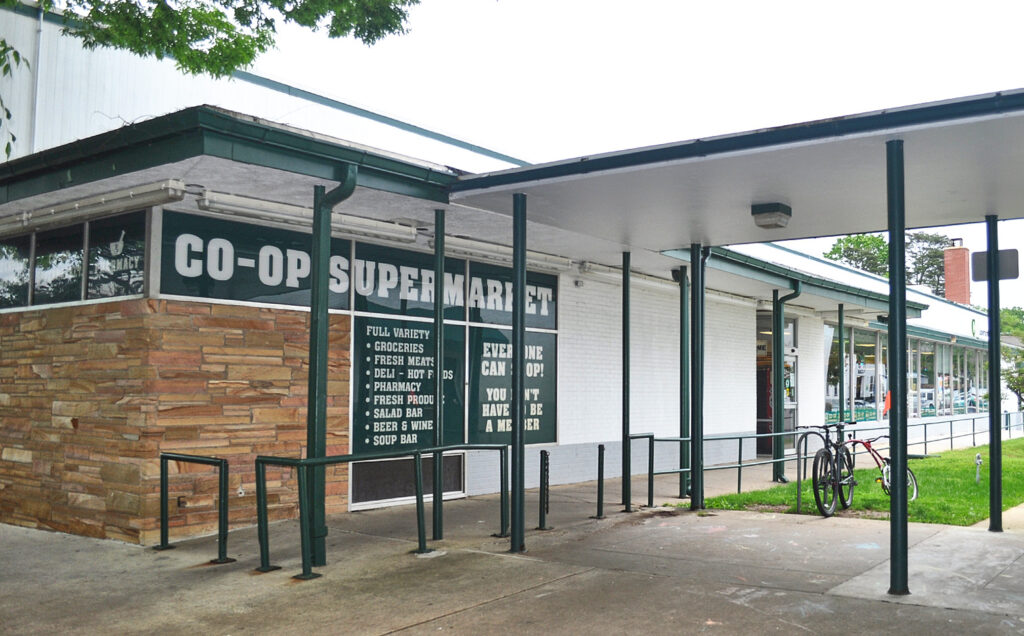
Unfunded capital projects of medium priority were the next topic of discussion. The Cherrywood Lane Complete and Green Street Retrofit is estimated to cost $12.5M but Salmerón said he is actively looking for an external source of funding for the project. The Springhill Lake Recreation Center addition, which would add a multipurpose room for meetings and classes is anticipated to cost $2.5M, but some funding has been awarded through the federal earmarks program. The Wayfinding project, designed to bring attention and business to Roosevelt Center, drew three speakers in support. The project consists of façade improvements (funding of $150K has already been received) and increased signage with an investment of $300K. Dan Gillotte, general manager of Greenbelt Co-op Supermarket and Pharmacy, Kim Kash of the Greenbelt Business Alliance and Caitlin McGrath, executive director of Greenbelt Cinema, advocated for the project, saying the Wayfinding project is necessary to make Roosevelt Center a destination. Salmerón stated he saw value in moving it to the high priority list to “create synergy” between the Wayfinding and façade improvement projects.
Other medium priority projects presented included the traffic calming work in center city, both short- and long-term improvements ($530K and $2.1M, respectively), Greenbelt East Trail segment 1 ($3.6M), Hanover Parkway sidewalk gap improvements ($283K), Youth Center HVAC work ($3M) and playground improvements ($4.75M for which Salmerón is seeking funding).
Councilmember Priorities
Jordan asked councilmembers for their priorities. The Greenbelt Station Trail, lights at the Schrom Hills Park ballfield, Wayfinding project, Greenbelt East Trail and streetlight conversion were mentioned most often. Councilmember Frankie Fritz, in naming his priorities, encouraged council to consider geographic parity, ensuring the funds are spent equally among the east, west and center parts of the city. Salmerón encouraged prioritizing fair wages and cost of living adjustment for staff and projects involving health and safety.
The discussion of vehicle replacement for the Police Department was joined by Police Chief Richard Bowers via Zoom. Jordan noted at the beginning of the discussion that about two years ago several police vehicles had been replaced using ARPA (American Rescue Plan Act) funds which has created a “bubble” of vehicles that will need to be replaced at the same time in the future. At least 15 vehicles are being recommended for replacement in Fiscal Year (FY) 2027, in addition to the three vehicles purchased in FY 2025.
The criteria for replacement include age of the vehicle and its mileage, noting that some vehicles are allowed to be taken home by an officer, and that vehicles used for patrol and investigations receive heavy use. Maintenance expenses increase and reliability decreases as a vehicle ages, Bowers added. Bowers stated that the preferred vehicles are Ford Explorer hybrids, adding that the infrastructure is not present to make another electric vehicle feasible; a fast-charging system would be necessary. Weaver asked if any other sources of funding might be available, but Bowers replied that he wasn’t aware of any. Salmerón expressed the opinion that it might be possible to replace at least six of the requested 15 vehicles.
Councilmembers discussed at length ways in which they might individually prioritize the projects and then reach consensus on council’s priorities. Salmerón added that he will do his best to create a balanced budget for council’s approval.