The focus of the February 23 meeting of the Greenbelt City Council appeared to be on communicating as council gave guidance to the lawyers working on the changes needed to expand collective bargaining rights to all city employees, heard a status report on development of a flood resiliency plan for parts of the city and provided comments on the plans for a new Springhill Lake Elementary School and the countywide transportation master plan.
Collective Bargaining
Council briefly discussed several questions raised by City Manager Josué Salmerón so that he can give appropriate guidance to the lawyers working to extend bargaining rights beyond the police. Council has already made changes to the law to grant Public Works employees collective bargaining rights and is working on how best to extend that right more broadly.
Most councilmembers agreed that there should be a neutral third party to designate bargaining units (BU). Four councilmembers favored permitting part-time employees to be included in BU, with Mayor Emmett Jordan and Councilmember Silke Pope opposed.
There was more diversity about how many non-police BU there should be. Pope favored a single BU; Fritz said that Public Works should have its own as the nature of the work is much different; Councilmembers Jenni Pompi, Danielle McKinney and Amy Knesel were in favor of multiple BU. Jordan and Pope expressed concern about the difficulties of negotiating with multiple BU. Pope said, “I don’t know how we can do for three what we do for one.” (Councilmember Kristen Weaver was absent on travel.)
Flood Resiliency
Project Manager Anouk
Savineau and Brad Udvardy of LimnoTech reported on their work on developing a flood resiliency plan. Based upon community input at an August 2025 public meeting and the results of an
online survey/mapping exercise, they are focusing on central Greenbelt, which has the most frequent and severe reports of flooding. Savineau told council that the ultimate goal of a resiliency plan is rarely to eliminate flooding but to mitigate risk.
They have modeled and assessed inland flooding in central Greenbelt. They are focusing on two areas: the intersection of Lakeside Drive and Westway, and the Youth Center area.
In the first area, while the stormwater pipes have the capacity to handle the volume of water of major storms, the catch basins are not able to get that stormwater into the pipes. He said that their models indicate that higher capacity drains with grates are needed.
The Youth Center area has a lot of impervious surfaces, Udvardy said, such as roofs and parking lots. In this area, the stormwater pipes are at or near full capacity. Their models show that increasing pipe size is effective. He cautioned, however, that in each area addressing the problems could push the flooding issue downstream.
The study also looks at riverine flooding near Indian Creek. Savineau said that a 100-year flood could affect apartments near Edmonston Road. A 500-year flood could flood 14 buildings. The approach here could be to add topography such as berms and flood walls. The idea is to focus mitigation efforts on the areas that could suffer the most damage and examine how to increase resiliency.
The company’s next step is to develop a flood resiliency plan, which they expect to finish mid-March or April.
Listening to the LimnoTech presentation, Salmerón said he was hearing millions of dollars in expenses but that the city had neither the expertise nor the funds to make such extensive improvements.
SHL Elementary
Council unanimously approved a letter to be sent to Maryland-National Capital Park and Planning Commission (M-NCPPC) regarding construction of the new Springhill Lake Elementary School. This was in response to a referral focusing on the exterior of the project. City of Greenbelt Community Planner Ryan Sigworth said the main concern is that the building is too small to accommodate the estimated 350 additional students who will live in the 2,500 approved units on the redeveloped Beltway Plaza area. The school’s capacity will be further pressed if residential housing is built on the Greenbelt Metro site.
Another concern is that there is now less queueing space in the bus loop, which could cause buses to back up onto Springhill Drive, blocking traffic. Other concerns include locations of crosswalks and the city’s desire for all school crosswalks to be raised. The County Council/Planning Board will hold a public hearing on the plan on April 16.
Other Matters
Council approved a draft letter to M-NCPPC containing detailed comments on the countywide transportation master plan. There will be a planning board public hearing on the plan on March 24.
Salmerón reported that the city had received $1.8 million in federal funds. Of that, $1.5 million was for replacing the roof of the Youth Center and $250,000 is for an addition at the Springhill Lake Recreation Center.
Salmerón and staff are nearing completion of their proposed budget for the fiscal year that begins July 1, 2026 (FY 2027). He promised delivery of a balanced budget.
Council gave final approval to a resolution changing the name of the Public Safety Advisory Committee to the Advisory Committee Advancing Public Safety (ACAPS).
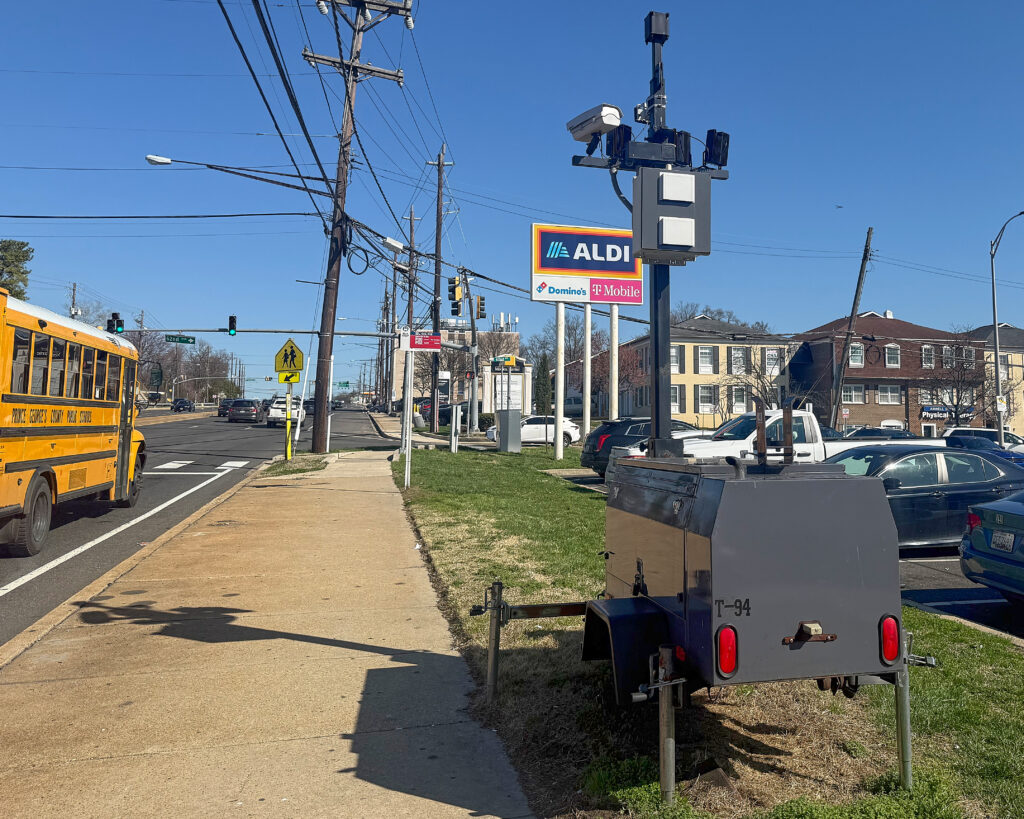
Council voted to support House Bill (HB) 950 which would allow municipalities to purchase streetlights and convert them to LED, and HB 1127 which would authorize a five-year pilot of automated camera systems in school zones with the issuance of a $40 ticket for failure to yield to pedestrians.