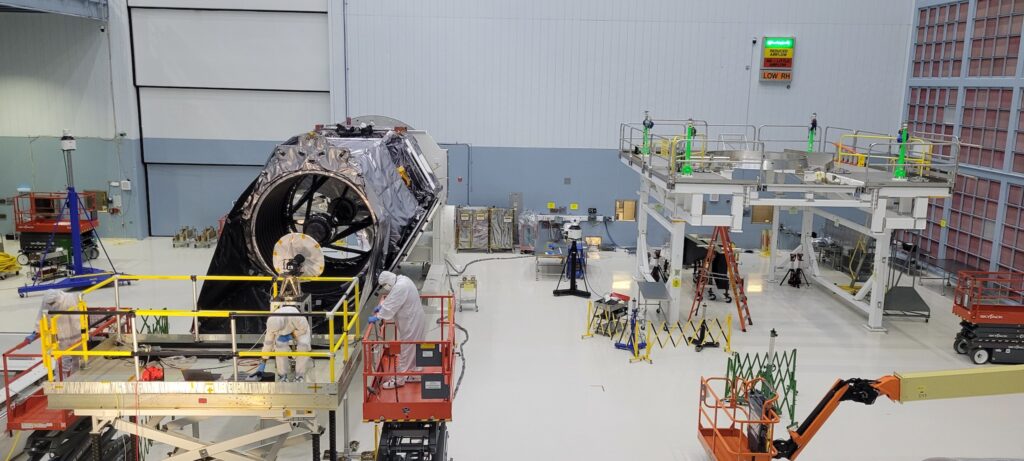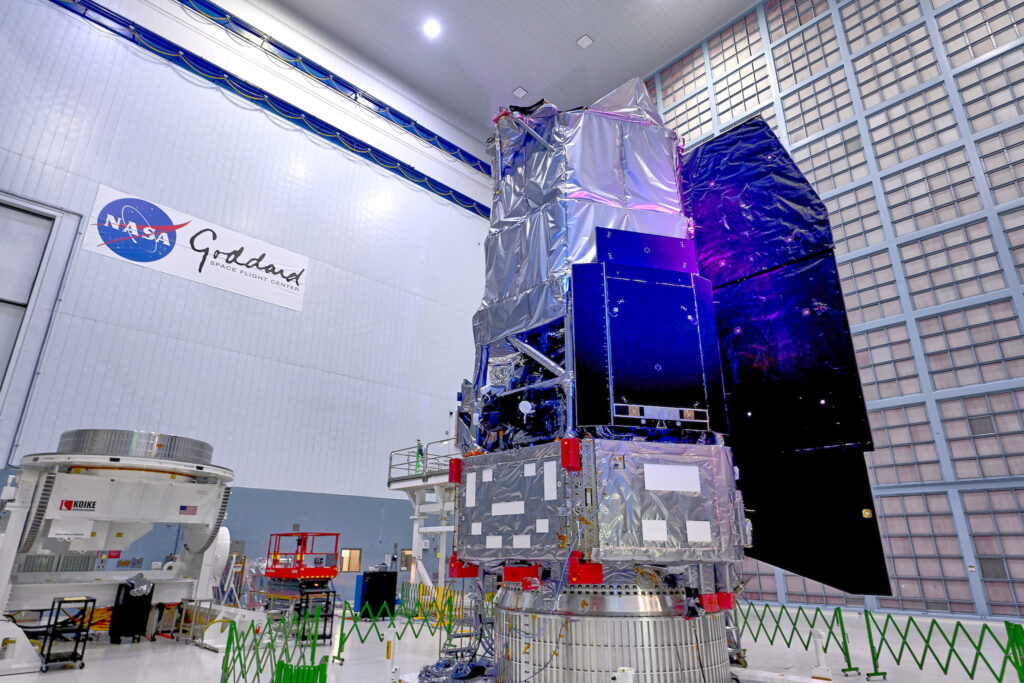
NASA scientists may be on the brink of a series of unprecedented space discoveries starting this September — and the telescope at the center of it was largely built and tested here in Greenbelt.
The Nancy Grace Roman Telescope, named after NASA’s first female executive and first Chief of Astronomy, is a new NASA observatory that was constructed and tested at the Goddard Space Flight Center in Greenbelt. Goddard’s two main objectives in creating Roman are to discover the cause of the expansion of the universe and to search for exoplanets, which are planets located outside the solar system.
Scientists expect Roman will unveil secrets about this galaxy in ways that have never been possible with NASA’s previous telescopes, Hubble and James Webb. With data collected from Roman, scientists can study 100,000 exoplanets, hundreds of millions of galaxies, billions of stars and rare objects that have never been witnessed before.
Goddard is home to scientists and engineers who build spacecraft instruments to study the universe. The center employs many Greenbelt residents and maintains strong ties to the community. Ryan McClelland, a Greenbelt resident, is one of the thousands of scientists who work at Goddard.
“Greenbelters feel very connected to the missions that are built here, because we live in the area. We’re close to work, so it’s very easy to get to,” McClelland said. “I ride my scooter to the office every day, so I think we feel an extra connection to the missions just by our physical proximity.”
McClelland, a University of Maryland alumnus, was the instrument carrier manager through the preliminary design review of Roman. In this role, he led a team of engineers and technicians responsible for building the main structure of the telescope.
McClelland said his favorite part of working on the project was the quality of the team he worked with. “It really is just an amazing team of really very brilliant, hardworking people. The inspiring science mission really draws in some of the most passionate, talented workforce,” he said.
NASA announced that the telescope is on track to launch this September, eight months ahead of schedule and on budget. McClelland believes that the hard work of the team, along with effective management, has contributed to the success and speed of Roman’s development.
“The success of Roman, especially with the budget and schedule success, should help us win more work in the future,” he said, noting Greenbelt’s potential growth as a center for space exploration.
Large portions of the telescope were designed and built at Goddard, including the spacecraft bus (usually built elsewhere), a crucial component that contains the electronics, propulsion systems and antennas that allow the telescope to operate and communicate with Earth. According to McClelland, the bus is usually built out of house, but for Roman, it was designed and built at Goddard.
“The bulk of the design, simulation, fabrication [and] assembly was done at Goddard,” he said.
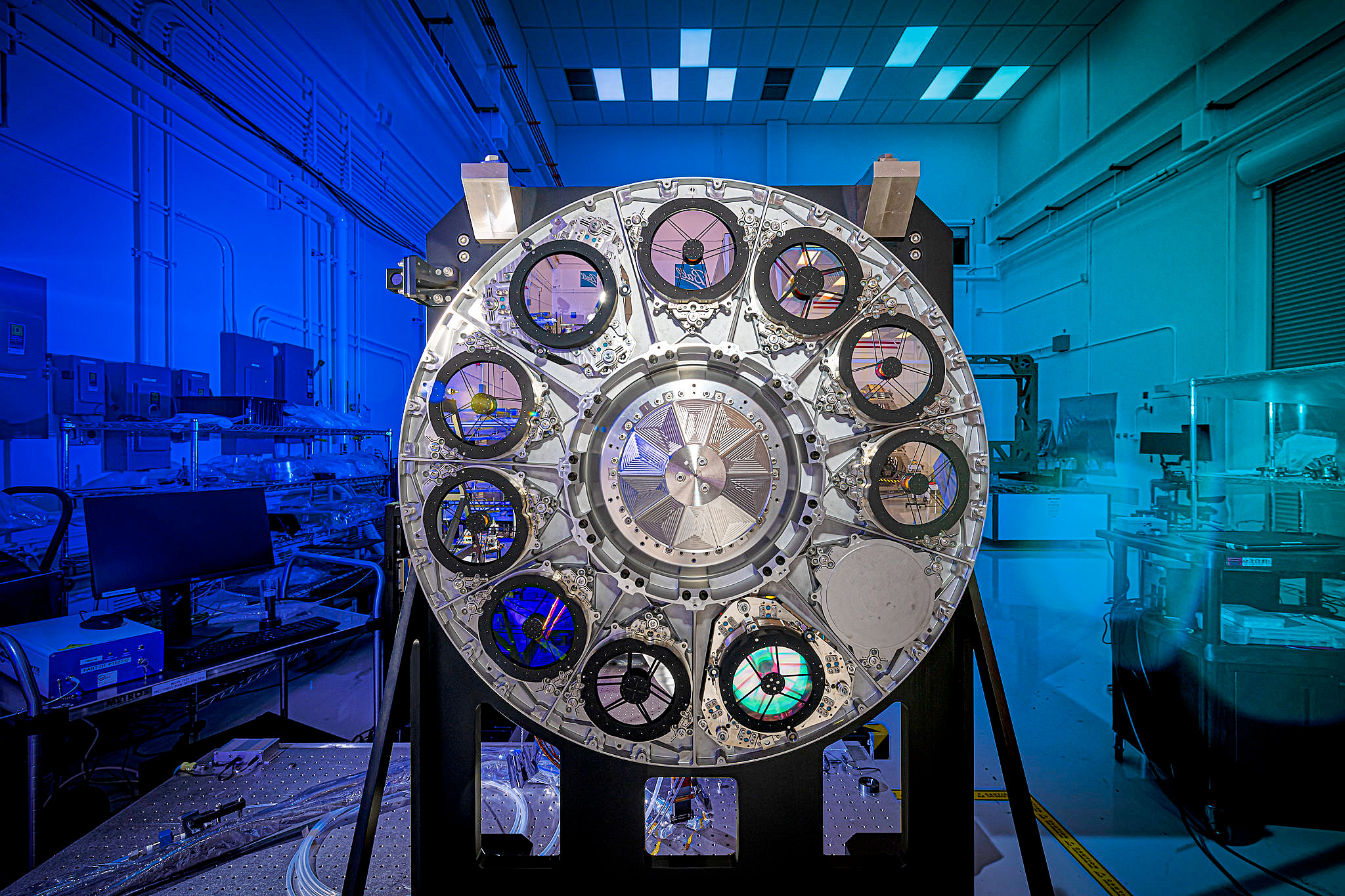
Engineers in Goddard’s Engineering and Technology Directorate helped develop several components for Roman, including instruments that will enable scientists to measure the distances and speeds of stars and galaxies.
Throughout Roman’s mission, scientists hope to collect the deepest and most detailed views and data of the Milky Way ever captured. This will be accomplished through Roman’s Galactic Bulge Time-Domain Survey, which will track stars’ brightness and discover distant, unknown planets, likely setting the record for studying the farthest-known exoplanet.
Another one of Roman’s main objectives is to conduct surveys of the cosmos to allow scientists to better understand dark matter, which is causing the universe to expand quickly.
“The most exciting thing for me is that there’s some result that points the way to new physics and a better understanding of the universe, and especially the great mysteries of dark energy and dark matter,” McClelland said.
On May 20 and 21, Roman passed the final critical inspection of its primary mirror. In the next few weeks, the telescope will be shipped to NASA’s Kennedy Space Center, located on Merritt Island, Fla., where the current plan is for launch this September.
Charlotte Ormond is a University of Maryland student at the Philip Merrill College of Journalism interning with the Greenbelt News Review.